The film captures the global challenge to lead the clean energy future by profiling U.S. and Chinese workers and business leaders who are racing to make crucial breakthroughs in the field. Catching the Sun debunks a false dilemma that clean energy requires sacrificing economic prosperity. Through the stories of an unemployed American worker, a Tea Party activist, and a Chinese solar entrepreneur, we will explore the global energy transition from the perspective of workers and entrepreneurs building solutions to income inequality and climate change with their own hands. Their successes and failures speak to one of the biggest questions of our time: will the countries actually be able to build a clean energy economy?
From fears about work and privacy to a rivalry between the U.S. and China, the series explores the promise and perils of AI. It traces a new industrial revolution that will reshape and disrupt our lives, our jobs and our world, and allow the emergence of the surveillance society. Today, China leads the world in e-commerce and is a society that bypassed credit cards. Now shops in stores are without cashiers, where the currency is facial recognition. No country has ever moved that fast. And in a short two-and-a-half years, China's A.I. implementation really went from minimal amount to probably about 17 or 18 unicorns, that is, billion-dollar companies. The progress was powered by a new generation of ambitious young techs pouring out of Chinese universities, competing with each other for new ideas, and financed by a new cadre of Chinese venture capitalists.
For 45 years, America was locked in the Cold War with the Soviet Union, and fear of global nuclear annihilation was constant. The end of the Cold War in 1991 was supposed to usher in a new era of peace and cooperation, but it didn’t last. Tensions between the U.S. and Russia have been simmering for years. And now, the conflict in Ukraine has pushed the relationship to the brink of full-blown crisis. VICE Founder Shane Smith met Kremlin officials and American leaders to figure out what’s really driving the new standoff between the powers, while correspondent Simon Ostrovsky reported from the front lines of the bloody war in Eastern Ukraine.
In the second episode, the directors learn their vision for the films is not always permissible by the U.S. government. Wyler is shocked by the racism he encounters against African American soldiers and refused to make a film recruiting black soldiers. Meanwhile, the films' racist depiction of the Japanese versus human depiction of the Germans causes worry for the War Department, which at that time planned to redistribute the Japanese-American population from internment camps into towns across the United States.
Principles of generosity and prosperity inform the selection of the last two crew members: Christopher Sembroski, a former member of the U.S. Air Force who served in Iraq and now works as a Lockheed Martin engineer, and Sian Proctor, a professor of geosciences and two-time NASA astronaut candidate. Excitement for the flight ramps up, but anxiety lingers.
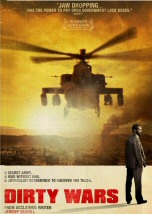
Investigative journalist Jeremy Scahill travels to Afghanistan, Yemen, Somalia, and other countries where the United States has taken military action in the War on Terror. In Afghanistan, he investigates the United States military and government cover-up of the deaths of five civilians, including two pregnant women killed by US soldiers from the Joint Special Operations Command. After investigating the attack, Scahill travels to other sites of JSOC intervention, interviewing both proponents and opponents, and the survivors, of such raids,including U.S. Senator Ron Wyden. Scahill also investigates the assassinations of American citizens Anwar al-Awlaki and his son Abdulrahman al-Awlaki, meeting with their family at their home in Yemen. Scahill suggests that the War on Terror is in fact a "self-fulfilling prophecy" and causes the radicalization of Muslims. He also discusses the case of Yemeni investigative journalist Abdulelah Haider Shaye who was detained, tried and sentenced on terrorism-related charges after reporting on American drone strikes.
















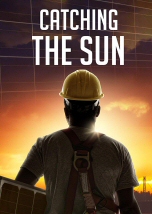








Through the stories of an unemployed American worker, a Tea Party activist, and a Chinese solar entrepreneur, we will explore the global energy transition from the perspective of workers and entrepreneurs building solutions to income inequality and climate change with their own hands. Their successes and failures speak to one of the biggest questions of our time: will the countries actually be able to build a clean energy economy?