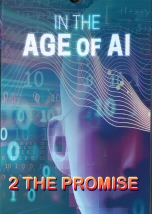
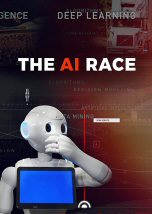
Explore how Artificial Intelligence will change your job as new research shows how much of what you do could be done by robots. From truckers to lawyers & doctors, we bring affected workers face to face with AI experts. How can we prepare for the coming changes to the world economy? We are on the precipice of another technological transformation. The last industrial revolution turned society upside down. It ultimately delivered greater prosperity and many more jobs, as well as the eight hour day and weekends.
But the transition was at times shocking and violent. The question is, can we do better this time? We don't realize that the future is not inevitable. The future is the result of the decisions we make today. These technologies are morally neutral, they can be used for good or for bad.
There's immense good things they can do, they can eliminate many disease,
they can help eliminate poverty, they can tackle climate change. Equally, the technology can be used for lots of bad. It can be used to increase inequality,it can be used to transform warfare. It can be used to make our lives much worse. We get to make those choices.
In Los Angeles, a remarkable experiment is underway; the police are trying to predict crime, before it even happens. At the heart of the city of London, one trader believes that he has found the secret of making billions with math. In South Africa, astronomers are attempting to catalogue the entire cosmos. These very different worlds are united by one thing - an extraordinary explosion in data. Meet the people at the forefront of the data revolution, and reveals the possibilities and the promise of the age of big data.
Between 1850 and 1950, three cataclysmic revolutions shook China to the core, but out of them, today's China emerged. The film begins in Canton with the meeting of a US missionary and a Chinese student. Inspired by the Christian story and calling himself God's second son, Hong unleashed the bloodiest war of the 19th century, the Taiping Rebellion. As imperial China weakened, foreign influence grew. Treaty ports expanded, bringing growth and wealth, trams, railways and western sensibilities. But this provoked another surge of violence, the Boxer Rebellion, an attack against the foreigners, which was crushed by those same foreigners, who extorted a huge indemnity - $60 billion in today's money. Then in 1912, the empire fell, and many groups contested China's future. In World War I, China sent 100,000 men to the western front, only to be humiliated at Versailles when German colonies in China were handed to Japan. Between the two world wars, the disparity between rich and poor, city and countryside increased. We visit Hong Kong's Peninsular Hotel in the jazz age and then follow Mao on the Long March to Yan'an, the heartland of revolution. World War II came to China two years earlier than it did in the west. Wood talks to a survivor of the Japanese massacre of Nanjing in 1937 and then charts the triumph of the communists, before ending the story with Mao's death and the boom time of the last 30 years. The series ends with the warmth of the Chinese family and, at Beijing's Altar of Heaven, a final haunting glimpse of eternal China.
The rock revolution of the 1960s seen through the life and music of Jimi Hendrix. We see how he became the first, ultimately doomed, icon of rock. The Birth Of Rock also explores the influence of rhythm & blues on a generation of British musicians such as The Rolling Stones, Cream and The Who, and how the song-writing of Bob Dylan and studio developments of The Beatles transformed the possibilities and ambitions of rock.
The film tells the story of an overlooked genius: Claude Shannon. In a blockbuster paper in 1948, Claude Shannon introduced the notion of a 'bit' and laid the foundation for the information age. His ideas ripple through nearly every aspect of modern life, influencing such diverse fields as communication, computing, cryptography, neuroscience, artificial intelligence, cosmology, linguistics, and genetics. But when interviewed in the 1980s, Shannon was more interested in showing off the gadgets he'd constructed -- juggling robots, a Rubik's Cube solving machine, a wearable computer to win at roulette, a unicycle without pedals, a flame-throwing trumpet -- than rehashing the past. Mixing contemporary interviews, archival film, animation and dialogue drawn from interviews conducted with Shannon himself, The Bit Player tells the story of an overlooked genius who revolutionized the world, but never lost his childlike curiosity.
This acclaimed docudrama is a chronicled look at the fall of the Romanov dynasty in Russia. When social upheaval sweeps Russia in the early 20th century, Czar Nicholas II resists change, sparking a revolution and ending his reign. In the first episode, Czar Nicholas II takes the Russian throne in 1894 and rejects modern ideas to embrace a pure autocracy. Tragedy marks his coronation day.














The question is, can we do better this time? We don't realize that the future is not inevitable. The future is the result of the decisions we make today. These technologies are morally neutral, they can be used for good or for bad. There's immense good things they can do, they can eliminate many disease, they can help eliminate poverty, they can tackle climate change. Equally, the technology can be used for lots of bad. It can be used to increase inequality,it can be used to transform warfare. It can be used to make our lives much worse. We get to make those choices.