How what began as a passion for the tantalising possibilities of jetpacks became an obsession. Shot over ten years, this documentary chronicles Australian David Mayman's seemingly impossible quest to fulfil his childhood dream to build and fly the world’s first jetpack. His ambition, which nearly cost him his life and family, culminates in an attempt to make the world's first jetpack flight around the Statue of Liberty.
In the fourth episode, leading landscape photographer Peter Eastway follows in the footsteps of Frank Hurley – the pioneering Australian photographer on Shackleton’s expedition to the south a century ago – to capture the wilderness and wildlife of Antarctica and South Georgia.
Earth's surface is covered in weird and wonderful patterns. The Australian outback is covered in pale spots, the work of wombats; a clearing in the endless green canopy of the Congo rainforest has been created by an incredible elephant gathering; and the twists and turns of the Amazon make a home for rehabilitated manatees. This is our home, as we've never seen it before.
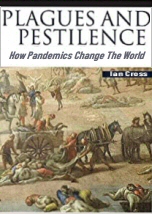
COVID-19 is far from the first pandemic to wreak havoc in the world. A long line of infectious diseases have devastated and in some cases destroyed entire societies. Almost all of them started in animals and made the jump to humans. The Black Death spread across Europe and Asia in the 14th century leaving millions dead in its wake. Between the 15th and 18th centuries, European colonists brought smallpox to the Americas, the Pacific region and to Australia. In Europe, the 17th century saw a series of major epidemics. And at the end of the First World War, more people died of the Spanish flu than on the battlefield. This documentary examines the causes of these epidemics - whether it be lack of hygiene, interaction with animals, overcrowding, or the growth of cities - and how people travelling helped to spread disease and promote pandemics. It also sheds a light on the impact these infectious diseases have had on politics and societal change. Over the centuries, scientists managed to develop treatments and medicines to help control or even eradicate infectious diseases. Virologists are facing that task again with the coronavirus, as the world frantically searches for ways to overcome a pandemic which threatens our modern way of life.
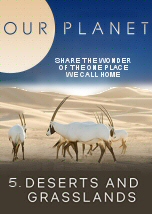
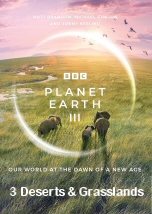
The third episode takes viewers on a riveting journey to some of the world's most extreme and breathtaking deserts and grasslands, where nature puts on its most dramatic show. It begins in the arid landscapes of Central Africa's Guelta d'Archei and the Namib Desert in Southwest Africa, places where water is scarce, and survival is a daily battle. The focus then shifts to the remarkable adaptability of creatures like ostriches, who brave the scorching heat and predators to raise their young and a handful of leopards who learned to hunt from trees on the African plains. In Australia, viewers witness the intricate courtship rituals of the spotted bowerbird, a species facing challenges due to climate change. The narrative then takes us to the vast Eurasian Steppe, home to the unique Saiga antelope, and to Brazil's Cerrado, a biodiverse grassland where the elusive maned wolf plays a crucial role in maintaining the ecosystem. The episode highlights not only the resilience and beauty of these creatures but also the fragility of their habitats, emphasizing the urgent need for conservation efforts.
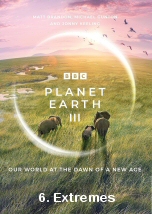
Explore the breathtaking extremes of our planet in this captivating episode. Journey through the vast Hang Son Doong cave in Vietnam, the largest on Earth. Witness the resilience of life in harsh conditions, marvel at the adaptation strategies of species like the blind cave fish and the enduring Arctic wolf pack. In the Arctic, observe the strategic hunt of wolves preying on musk oxen, a dance as old as the Ice Age. In the French Alps, the struggle for mating among common frogs unfolds, showcasing the urgency and challenges faced by cold-blooded animals. Witness the social dynamics of Barbary macaques in the cedar forests of the Atlas Mountains, where survival hinges on social bonds. The forests of Mexico, home to millions of monarch butterflies that huddle for warmth, illustrates the fragility and beauty of nature. Discover how fire shapes ecosystems in South Africa's fynbos and Northern Australia, crucial for the survival of species like the golden-shouldered parrot. The documentary poignantly addresses the impact of changing climates and human intervention on wildlife, from the endangered elephants of Amboseli, Kenya, to the secretive snow leopards of the Gobi Desert. This episode offers a profound glimpse into the extraordinary adaptations and challenges faced by wildlife across the globe, reminding us of the delicate balance and beauty of life on Earth.












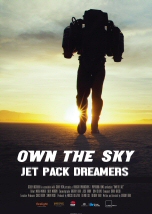









His ambition, which nearly cost him his life and family, culminates in an attempt to make the world's first jetpack flight around the Statue of Liberty.