




Last Watched

"Learning"  Sort by

Rise of the Machines

   2020    Technology
From the first transistor to deep learning networks, the rise of computing power over the last 50 years has been so phenomenal it's changed everything from the way we communicate to how our appliances interact. Fuelled by giant leaps forward in computer technology, the race is on. As the progress of machines continues to accelerate, so will the pace of change.
Series: The Great Acceleration

T Rex Timeline

   2019    Science    HD
The Tyrannosaurus Rex is known as the king of the dinosaurs, but how did its reign begin? Meet Moros Intrepidus, a 180 lb., deer-sized ancestor to the T-Rex. Learn how the latest in palaeontology can now link this small dinosaur to the 19,000-pound Scotty, the largest T-Rex ever discovered.
We're filling in gaps in the history of well-known dinosaurs and we're finding specimens of even the most famous dinosaur that are telling us new things about their biology, about their growth, about their size, that we didn't know before. We are nowhere at the end of learning about dinosaurs and in generations to come, we will be knowing things about the lives of these ancient creatures that would probably blow our minds.
Series: Breakthrough

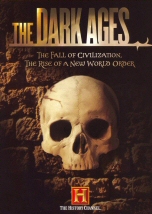
The Dark Ages

       History    HD
Join us on an unforgettable voyage through one of the most desolate periods in human history as the rulers, conflicts, and cataclysmic societal breakdown of Early Middle Ages are brought to light. At its height in the second century A.D., the Roman Empire was the beacon of learning, trade, power and prosperity in the western world. But the once-powerful Rome--rotten to the core by the fifth century--lay open to barbarian warriors who came in wave after wave of invasion, slaughtering, stealing, and ultimately, settling. As chaos replaced culture, Europe was beset by famine, plague, persecutions, and a state of war that was so persistent it was only rarely interrupted by peace.
The documentary profiles those who battled to shape the future, from the warlords whose armies threatened to case the demise of European society, like Alaric, Charles the Hammer, and Clovis; to the men and women who valiantly tended the flames of justice, knowledge, and innovation including Charlemagne, St. Benedict, Empress Theodora, and other brave souls who fought for peace and enlightenment. It was in the shadows of this turbulent millennium that the seeds of modern civilization were sown.

The Future of Work

   2019    Technology
A.I. can be used in many ways that are very beneficial for society. But the current use of A.I. isn't necessarily aligned with the goals of building a better society, unfortunately. But, but we could change that. A.I. will be viewed as an age of enlightenment. Our children and their children will see A.I. as serendipity, that A.I. is here to liberate us from having to do routine jobs, and push us to do what we love, and push us to think what it means to be human. But what if humans mishandle this new power?
Series: In the Age of AI

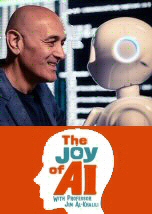
The Joy of AI

   2018    Technology
Professor Jim Al-Khalili looks at how we have created machines that can simulate, augment, and even outperform the human mind - and why we shouldn't let this spook us. He reveals the story of the pursuit of AI, the emergence of machine learning and the recent breakthroughs brought about by artificial neural networks. He shows how AI is not only changing our world but also challenging our very ideas of intelligence and consciousness.
Along the way, we'll investigate spam filters, meet a cutting-edge chatbot, look at why a few altered pixels makes a computer think it's looking at a trombone rather than a dog and talk to Demis Hassabis, who heads DeepMind and whose stated mission is to 'solve intelligence, and then use that to solve everything else'. Stephen Hawking remarked 'AI could be the biggest event in the history of our civilisation. Or the worst'. Jim argues that AI is a potent new tool that should enhance our lives, not replace us.

The Language of Science

   2017    History
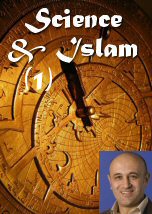
Physicist Jim Al-Khalili travels through Syria, Iran, Tunisia and Spain to tell the story of the great leap in scientific knowledge that took place in the Islamic world between the 8th and 14th centuries. Its legacy is tangible, with terms like algebra, algorithm and alkali all being Arabic in origin and at the very heart of modern science - there would be no modern mathematics or physics without algebra, no computers without algorithms and no chemistry without alkalis. For Baghdad-born Al-Khalili, this is also a personal journey, and on his travels he uncovers a diverse and outward-looking culture, fascinated by learning and obsessed with science. From the great mathematician Al-Khwarizmi, who did much to establish the mathematical tradition we now know as algebra, to Ibn Sina, a pioneer of early medicine whose Canon of Medicine was still in use as recently as the 19th century, Al-Khalili pieces together a remarkable story of the often-overlooked achievements of the early medieval Islamic scientists.
Series: Science and Islam
Strangest Things

Strangest Things

2021  History
Walking with Cavemen

Walking with Cavemen

2003  History
Natural World

Natural World

2017  Nature
Eden: Untamed Planet

Eden: Untamed Planet

2021  Nature
Black Hole Apocalypse

Black Hole Apocalypse

2018  Science
Prehistoric Planet

Prehistoric Planet

2022  Science
Asia

Asia

2024  Nature