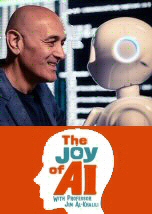
Mathematician Dr Hannah Fry explores the mystery of maths. It underpins so much of our modern world that it's hard to imagine life without its technological advances, but where exactly does maths come from? Is it invented like a language or is it something discovered and part of the fabric of the universe? It's a question that some of the most eminent mathematical minds have been wrestling with. To investigate this question, Hannah goes head first down the fastest zip wire in the world to learn more about Newton's law of gravity, she paraglides to understand where the theory of maths and its practice application collide, and she travels to infinity and beyond to discover that some infinities are bigger than others. In this episode, Hannah goes back to the time of the ancient Greeks to find out why they were so fascinated by the connection between beautiful music and maths. The patterns our ancestors found in music are all around us, from the way a sunflower stores its seeds to the number of petals in a flower. Even the shapes of some of the smallest structures in nature, such as viruses, seem to follow the rules of maths. All strong evidence for maths being discovered. But there are those who claim maths is all in our heads and something we invented. To find out if this is true, Hannah has her brain scanned. It turns out there is a place in all our brains where we do maths, but that doesn't prove its invented. Experiments with infants, who have never had a maths lesson in their lives, suggests we all come hardwired to do maths. Far from being a creation of the human mind, this is evidence for maths being something we discover. Then along comes the invention of zero to help make counting more convenient and the creation of imaginary numbers, and the balance is tilted in the direction of maths being something we invented. The question of whether maths is invented or discovered just got a whole lot more difficult to answer
Life goes to extraordinary lengths to survive this immense realm. A 30 tonne whale shark gorges on a school of fish and the unique overhead heli-gimbal camera reveals common dolphins rocketing at more than 30km an hour. Descending into the abyss, deep sea octopus fly with wings and vampire squid use bioluminescence to create an extraordinary colour display. The first ever time-lapse footage taken from 2,000m down captures eels, crabs and giant isopods eating a carcass, completely consuming it within three hours.
Join David Attenborough on an extraordinary voyage into the hidden world beneath the waves. With unmatched storytelling and unparalleled access to remote ocean realms, he unveils a new era of marine discovery. Through breathtaking visuals and compelling narratives, the documentary exposes both the fragile beauty of ocean life and the grave challenges it faces. Yet, amid the threats, a powerful message of hope emerges — revealing nature's remarkable resilience and the inspiring efforts that could restore the oceans for future generations.
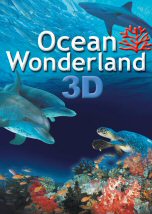
The mission of the film is to underline the crucial ecological role of coral reefs play in maintaining the well being of our planet, and to point out and warn against the dangers that are destroying the world's coral reefs. Entirely filmed using digital technology, thanks to it, the film was shot almost entirely with natural light, thus showing the underwater world as it exactly is. This is the closest you can get to dive without being there. Shot on the Great Barrier Reef in Australia and in the Bahamas, it brings to you the amazing beauty of the many varieties of coral and the immense diversity of the marine life thriving there.
Oceans are the largest ecosystem on earth, covering two thirds of our world’s surface and providing half the oxygen in our atmosphere. They are home to as much as 80 per cent of all life on earth, and nearly three billion people rely on them for their primary source of food. But our planet’s oceans would be little more than stagnant wastelands, and life on planet earth would cease to exist, were it not for one simple factor: a global network of powerful ocean currents. Every drop of seawater on earth rides these currents, taking 1,000 years to complete a single circuit. Without the constant mixing of currents, tides and waves, our oceans would stop supporting life - and a healthy ocean is vital to a healthy planet.
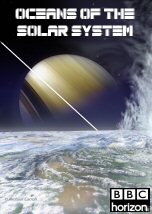
The oceans define the earth. They are crucial to life and we used to think that they were unique to our blue planet. But we were wrong. It has recently been discovered that there are oceans all over our solar system, and they are very similar to our own. And now scientists are going on an epic journey in search of new life in places that never seemed possible. Nasa is even planning to dive to the depths of a strange, distant ocean in a remarkable submarine. Discover that the hunt for oceans in space is marking the dawn of a new era in the search for alien life.








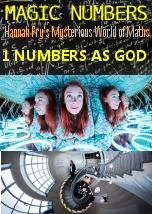









In this episode, Hannah goes back to the time of the ancient Greeks to find out why they were so fascinated by the connection between beautiful music and maths. The patterns our ancestors found in music are all around us, from the way a sunflower stores its seeds to the number of petals in a flower. Even the shapes of some of the smallest structures in nature, such as viruses, seem to follow the rules of maths. All strong evidence for maths being discovered. But there are those who claim maths is all in our heads and something we invented. To find out if this is true, Hannah has her brain scanned. It turns out there is a place in all our brains where we do maths, but that doesn't prove its invented.
Experiments with infants, who have never had a maths lesson in their lives, suggests we all come hardwired to do maths. Far from being a creation of the human mind, this is evidence for maths being something we discover. Then along comes the invention of zero to help make counting more convenient and the creation of imaginary numbers, and the balance is tilted in the direction of maths being something we invented. The question of whether maths is invented or discovered just got a whole lot more difficult to answer