


Last Watched

"Places on the Globe"  Sort by

Evolution

   2013    Nature    3D    HD
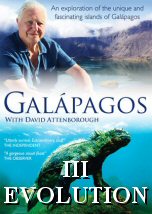
No two islands in the Galapagos are the same. The imperceptible drift of a continental plate keeps each island biologically isolated. David Attenborough explores this evolutionary crucible, encountering tortoises that weigh up to half a tonne, finches that use tools and lizards that communicate using press-ups; for Darwin, this was all evidence for his theory of evolution. We see the final footage of the world famous tortoise fondly known as Lonesome George, the last survivor of his species. David Attenborough was the last person to have ever filmed with him. Darwin’s famous visit had a downside – the arrival of man. David investigates the impact we’ve had in these islands, as our influence is a double-edged sword. We’ve disrupted the natural balance but he also believes Darwin would be thrilled with the advances we have made in science. We’re also now uncovering evidence that evolution is more rapid than Darwin could ever have imagined. Whatever wonders the Galapagos Islands hold today, they are only a hint of what awaits them in the future.
Series: Galapagos with David Attenborough

Faces Places

   2017    Art
Agnes Varda, one of the leading lights of France's honored French New Wave cinema era, and professional photographer and muralist, J.R., partake on a special art project. Together, they travel around France in a special box truck equipped as a portable photo booth and traveling printing facility as they take photographs of people around the country.
With that inspiration, they also create special colossal mural pictures of individuals, communities and places they want to honor and celebrate. Along the way, the old cinematic veteran and the young artistic idealist enjoy an odd friendship as they chat and explore their views on the world as only they can.

Fire

   2010    Culture
Iain explores man's relationship with fire. He begins by embarking on an extraordinary encounter with this terrifying force of nature - a walk right through the heart of a raging fire. Fire has long been our main source of energy and Iain shows how this meant that the planet played a crucial role in Britain's industrial revolution, whilst holding China's development back. Along the way he dives in a mysterious lake in Oregon, climbs a glacier of salt, crawls through an extraordinary cave in Iran and takes a therapeutic bath in crude oil.
Series: How Earth Made Us

Flying High

   2012    Nature
To fly like a bird, Earthflight not only captured remarkable images of wild flocks but also relied on some extraordinary relationships between people and birds. Filmed over four years, in six continents and more than 40 countries, the Earthflight team used many extraordinary techniques. For some of the unique flying shots, members of the team became part of the flock. The birds followed wherever they went - even in a microlight over Edinburgh and London. In Africa, paragliders floated alongside wild vultures, while a model vulture carried a camera inside the flock. In South America, wild-living macaws, that were rescued as babies, still come back to visit their 'foster mother' as he travels along a jungle river. In Africa, a radio-controlled 'drone' silently infiltrates masses of pink flamingos without disturbing a feather, and microlights and helicopters capture the dramatic moment white storks arrive over Istanbul. In Africa a tame vulture carried a camera across the African bush and recreated the behaviour of his wild relatives. Similarly, in the USA, a flock of hand-reared snow geese followed the migration route of wild flocks and took in the sights and sounds of New York - managing to get lost in Brooklyn
Series: Earthflight

Frozen Planet: Autumn

   2011    Nature
For the animals in the polar regions, autumn means dramatic battles and epic journeys. Time is running out - the Arctic Ocean is freezing over and the sea ice is advancing at 2.5 miles per day around Antarctica. Polar bears gather in large numbers on the Arctic coast as they wait for the return of the ice. Soon, tempers fray and violent sparring contests break out. Meanwhile 2,000 beluga whales head for one special estuary, a gigantic 'whale spa' where they will thrash their snow-white bodies against the gravel and exfoliate. Inland, the tundra undergoes a dramatic transformation from green to fiery red. Here, musk ox males slam head-first into each other with the force of a 30mph car crash as they struggle to defend their harems. Frisky young caribou males play a game of 'grandma's footsteps' as they try to steal the boss's female. Down in Antarctica, Adelie penguin chicks huddle together in creches. When a parent returns from fishing, it leads its twins on a comical steeplechase - sadly there's only enough for one, so the winner gets the meal. Two months later and the chicks are fully feathered apart from downy Mohican hairdos - they're ready to take their first swim - reluctantly though, as it seems penguins are not born with a love of water! And with good reason - a leopard seal explodes from the sea and pulls one from an ice floe, a hunting manoeuvre that has never been filmed before. As winter approaches and everyone has left, the giant emperor penguin arrives and makes an epic trek inland to breed. The mothers soon return to the sea leaving the fathers to hold the eggs and endure the coldest winter on earth.
Series: Frozen Planet

Frozen Planet: On Thin Ice

   2011    Science
Sir David Attenborough journeys to both Polar Regions to investigate what rising temperatures will mean for the people and wildlife that live there and for the rest of the planet. David starts out at the North Pole, standing on sea ice several metres thick, but which scientists predict could be Open Ocean within the next few decades. The Arctic has been warming at twice the global average, so David heads out with a Norwegian team to see what this means for polar bears. He comes face-to-face with a tranquilised female, and discovers that mothers and cubs are going hungry as the sea ice on which they hunt disappears. In Canada, Inuit hunters have seen with their own eyes what scientists have seen from space; the Arctic Ocean has lost 30% of its summer ice cover over the last 30 years. For some, the melting sea ice will allow access to trillions of dollars worth of oil, gas and minerals. For the rest of us, it means the planet will get warmer, as sea ice is important to reflect back the sun's energy. Next David travels to see what's happening to the ice on land: in Greenland, we follow intrepid ice scientists as they study giant waterfalls of meltwater, which are accelerating iceberg calving events, and ultimately leading to a rise in global sea level. Temperatures have also risen in the Antarctic - David returns to glaciers photographed by the Shackleton expedition and reveals a dramatic retreat over the past century. It's not just the ice that is changing - ice-loving adelie penguins are disappearing, and more temperate gentoo penguins are moving in. Finally, we see the first ever images of the largest recent natural event on our planet - the break up of the Wilkins Ice Shelf, an ice sheet the size of Jamaica, which shattered into hundreds of icebergs in 2009.
Series: Frozen Planet
Arnold

Arnold

2023  History
Life

Life

2009  Nature
Dirty Money

Dirty Money

2018  Culture
Get Gotti

Get Gotti

2023  History
Prehistoric Planet

Prehistoric Planet

2022  Science
Bronze Age

Bronze Age

2016  History