The documentary shows the daily activities performed by the local and international staff who lives and works inside the Bear Rescue Center situated in Tam Dao National park, Northern Vietnam. Interviews, original and archive footage are edited to explain life, tasks and achievements of this NGO managed by Animals Asia. In this natural sanctuary, moon bears and sun bears are rescued, treated, kept safe and nursed: they are now free from the suffering caused by the cruel tortures of bile farming and extraction process. Since thousands of years bear bile products are in use in traditional oriental medicine and even nowadays it generates around two billions dollars of illegal business. Animals Asia staff is not only assuring better living and relief for rescued bears but promotes educational awareness about the bile farming issues, employees and generates fare trades for a relevant number of people of this rural area of Vietnam.
Professor Diarmaid MacCulloch - one of the world's leading historians - reveals the origins of Christianity and explores what it means to be a Christian. In the first episode, he overturns the familiar story that it all began when the apostle Paul took Christianity from Jerusalem to Rome. Instead, he shows that the true origins of Christianity lie further east, and that at one point it was poised to triumph in Asia, maybe even in China. The headquarters of Christianity might well have been Baghdad not Rome, and if that had happened then Western Christianity would have been very different.
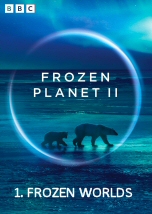
Journeying from pole to pole, The series 'Frozen Planet II' reveals surprising worlds that exist across the planet and the remarkable animals that make them their home. In a fragile world of beauty and hostility, nature finds a way to survive and thrive. David Attenborough explores a planet on the brink of major change. In the first episode, we begin our journey in the far south, in the most hostile place on earth, the frozen continent of Antarctica. After being raised on the ice in winter, emperor penguin chicks find themselves abandoned by their parents in spring. To survive, they must find their own way across the treacherous sea ice to the rich waters of the Southern Ocean. The waters surrounding Antarctica may be the richest of all, but they are also home to an exceptionally sophisticated predator, the killer whale. To reach their favored prey, Weddell seals, a family of killer whales have learnt to generate their own waves, washing the seals off their ice floes. It’s a technique that has been passed down over generations and is coordinated by the family matriarch, who can be over 100 years old. Leaving Antarctica and travelling north, we discover frozen habitats that are created by altitude. The greatest of these is the Himalaya, the tallest mountain range on earth, which contains so much ice and snow it is known as the third pole. In the shadow of the Himalaya lies a vast frozen grassy plain that is home to the fluffiest cat in the world, Pallas’s cat. It may have extremely dense fur, but if it’s to survive the Mongolian winter, it needs to catch lots of gerbils and voles. Easier said than done when you only have short legs and paws that are sensitive to the cold. North of the Great Steppe lies the boreal forest, which encircles the continents of North America, Europe and Asia, and remains frozen for six months of the year. Prowling these forests in the far east of Russia is the Siberian tiger, the largest cat in the world. In winter, it is on the lookout for black bears hibernating in caves, a high-risk strategy that only a cat of this size would attempt. Above the boreal forest, we cross into the Arctic Circle, where conditions become so extreme that trees can no longer grow. This is the tundra. Living here are relics of the last ice age, musk ox. In spring, their calves face a far greater danger than the cold, grizzly bears. Encounters can be brutal, but if just a few calves survive the gauntlet, the herd’s future is secure. To the north of the tundra is the Arctic Ocean, the only ocean that can completely freeze over. Living here is one of the most peculiar animals on earth, the hooded seal. Males have extraordinary inflatable noses, producing a bright red balloon out of their left nostrils. One male hopes this will make him irresistible. All of the frozen habitats share one thing in common: the threat posed by today’s climate change. Travelling to the island of Greenland, home to the largest body of ice in the northern hemisphere, we witness how global warming is melting its ice cap at faster rates than ever before, with profound consequences for global sea levels. Lastly, we visit the Arctic’s most iconic resident, the polar bear, as a mother bear struggles to provide for her cubs in a world of shrinking sea ice.
Sir David Attenborough presents Asia, an epic seven-part series that takes viewers on an extraordinary journey through the vast and diverse landscapes of the largest continent on Earth. From snow-capped mountain ranges and ancient forests to searing deserts and rich coastlines, this groundbreaking series reveals the astonishing wildlife and hidden natural wonders that define Asia’s breathtaking beauty and complexity. The adventure begins in spectacular fashion beneath the surface of Asia’s oceans. In this visually stunning first episode, we dive into a world few have seen—an underwater realm filled with vibrant coral gardens, mysterious sunken ruins, and pristine marine habitats untouched by time. Alongside renowned marine scientists and local experts, we encounter majestic whale sharks, soaring manta rays, ancient sea turtles, glowing jellyfish, and otherworldly nudibranchs. But as we uncover the secrets of these magical ecosystems, we also face the urgent environmental challenges that threaten their survival. Awe-inspiring and thought-provoking, this opening episode sets the tone for a series that is as visually dazzling as it is vital to understanding the future of our natural world.
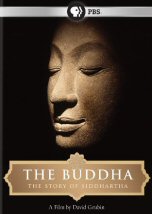
After 400 BC, a new philosophy was born in South east Asia, generated from the ideas of Buddha, a mysterious Prince from India who gained enlightenment while he sat under a large, shapely fig tree. He remains one of the most legendary and influential of all religious progenitors, but what of his actual life? In this biographical documentary, director David Grubin tells the historical tale of Gautama Buddha (563-483 BC), from his initial enlightenment through his death around the age of 80. In the process, Grubin makes an unusual point: that Gautama never once claimed to be God or God's emissary, but instead sought to find a way to bring peace and alleviation from suffering to others in a cruel and often insane world. In telling this story, Grubin combines a number of elements including original animations, testimony by contemporary Buddhists such as the 14th Dalai Lama Tenzin Gyatso, glimpses of sculptures and paintings that help tell Gautama's story, and much more. Narrated by Richard Gere
The series explores the impact of racism on a global scale and chronicles the shifts in the perception of race and the history of racism in Europe, the Americas, Australia and Asia. The first episode begins by assessing the implications of the relationship between Europe, Africa and the Americas in the 15th century. It considers how racist ideas and practices developed in key religious and secular institutions, and how they showed up in writings by European philosophers Aristotle and Immanuel Kant.












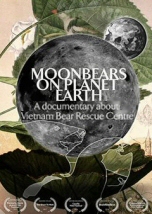






In this natural sanctuary, moon bears and sun bears are rescued, treated, kept safe and nursed: they are now free from the suffering caused by the cruel tortures of bile farming and extraction process. Since thousands of years bear bile products are in use in traditional oriental medicine and even nowadays it generates around two billions dollars of illegal business.
Animals Asia staff is not only assuring better living and relief for rescued bears but promotes educational awareness about the bile farming issues, employees and generates fare trades for a relevant number of people of this rural area of Vietnam.