We offer the complete second series of “Ancient Apocalypse” in a single video. In this series, journalist Graham Hancock travels to the Americas to search for evidence supporting his hypothesis: that an advanced civilization was lost to history during the cataclysms that marked the apocalyptic end of the last Ice Age, between 12,800 and 11,600 years ago. Each episode investigates new discoveries being made in the American hemisphere, which until recently has been largely under-explored by archaeologists interested in humanity’s origins. Graham reveals new findings and speculates about how those findings might suggest the existence of a globe-traveling advanced civilization that left traces of itself in ancient cultures. In episode one, evidence from New Mexico’s White Sands desert confirms the presence of people in the Americas long before it was possible to migrate across the Bering Straits that formed a land bridge during the lowered sea-levels of the Ice Age. The series takes us to multiple locations in the US, Mexico, Brazil, Peru and Easter Island to investigate when people first arrived in the “New World” and how they made the journey. The findings give Graham reason to question the accepted timeline of human history. During his journey, Graham interviews highly regarded archaeologists and historians as well as indigenous elders, who share their unique knowledge of the sites and their oral histories. Hollywood actor, Keanu Reeves, also joins Graham across the series, discussing, among other things, his insights into storytelling as an act of preserving culture. Experts in the series include American archaeologist Dr. Chris Davis, Brazilian palaeontologist Dr. Alceu Ranzi, and archaeo-botanist Dr. Sonia Cardinali of Rapa Nui, Easter Island, among others.
We offer this captivating full documentary series in a single video, inviting viewers to question everything they think they know about prehistory. Journalist Graham Hancock embarks on a global journey, exploring archaeological sites in search of clues to an advanced civilization that may have thrived thousands of years ago. Hancock presents a bold theory: during the last ice age, a sophisticated society existed but was wiped out by catastrophic meteor impacts roughly 12,000 years ago. He suggests that survivors of this lost civilization shared their knowledge with hunter-gatherers across the globe, sparking the development of early societies. Hancock visits intriguing sites and natural formations, presenting what he claims is evidence of this forgotten culture. He also asserts that mainstream archaeology may be overlooking—or even concealing—critical findings that support his theory. The series offers a fresh perspective on ancient history, blending mystery, controversy, and the thrill of discovery for those ready to rethink humanity's distant past. All eight episodes are available in a single, continuous video exclusively on our website.
Cullen Hoback dives into one of the most enduring and high-stakes mysteries in technology and finance: the origins of Bitcoin and the identity of its anonymous creator, Satoshi Nakamoto. More than a decade after Satoshi's disappearance, Bitcoin now threatens to disrupt the global financial order, forcing nations to reconsider the very nature of money as Satoshi potentially stands to become the richest person on earth. Known for uncovering clandestine subcultures and movements through digital forensics, Hoback immerses himself with key players, uncovers never-before-seen clues, and humorously unravels Bitcoin's chaotic origins and meteoric rise. The documentary offers a thrilling, globe-spanning investigation into the intentions of Bitcoin's enigmatic inventor, as Hoback encounters those who could be Satoshi, seeking to reveal who holds the power -- and what they might do with it if Bitcoin were woven into our daily lives.
The story of how a group of working-class kids growing up in post-industrial Glasgow dared to dream. Those kids became Simple Minds, the most iconic and influential Scottish band in history. The film is a captivating journey into the heart and soul of one of the most influential bands in rock history. From their humble beginnings in Glasgow to their meteoric rise on the world stage, this documentary unveils the untold stories behind Simple Minds' groundbreaking music and enduring legacy. Through rare archival footage, intimate interviews, and electrifying performances, discover how this iconic group defined an era, inspired generations, and proved that with passion and resilience, everything truly is possible. For fans and newcomers alike, this is more than a documentary—it's a celebration of the unyielding power of music to transform lives.
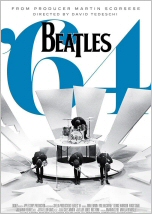
Step into the Beatlemania Era: Beatles '64 takes you back to February 1964, when four young musicians from Liverpool turned the United States upside down. Relive the frenzy of their iconic debut on The Ed Sullivan Show, watched by over 73 million viewers, and feel the pulse of their groundbreaking performance at the Washington Coliseum. Featuring rare, never-before-seen footage captured by acclaimed filmmakers Albert and David Maysles, digitally restored, this documentary unearths the Beatles’ meteoric rise to superstardom and the cultural revolution they ignited. Experience History Reimagined: With fresh insights from Paul McCartney and Ringo Starr, and audio remixed using cutting-edge technology by Giles Martin, Beatles '64 brings the spirit of the era to life like never before. Explore the personal dynamics of the Fab Four as they navigate a whirlwind of fame, fan hysteria, and musical innovation. Accompanied by a vibrant soundtrack featuring their timeless hits, this film immerses you in an extraordinary moment when music and culture collided, changing the world forever.
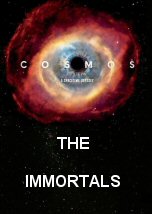
This episode covers the nature of how life may have developed on Earth and the possibility of life on other planets. Tyson begins by explaining how the human development of writing systems enabled the transfer of information through generations, describing how Princess Enheduanna ca. 2280 BCE would be one of the first to sign her name to her works, and how Gilgamesh collected stories, including that of Utnapishtim documenting a great flood comparable to the story of Noah's Ark. Tyson explains how DNA similarly records information to propagate life, and postulates theories of how DNA originated on Earth, including evolution from a shallow tide pool, or from the ejecta of meteor collisions from other planets. In the latter case, Tyson explains how comparing the composition of the Nakhla meteorite in 1911 to results collected by the Viking program demonstrated that material from Mars could transit to Earth, and the ability of some microbes to survive the harsh conditions of space. With the motions of solar systems through the galaxy over billions of years, life could conceivably propagate from planet to planet in the same manner. Tyson then moves on to consider if life on other planets could exist. He explains how Project Diana performed in the 1960s showed that radio waves are able to travel in space, and that all of humanity's broadcast signals continue to radiate into space from our planet. Tyson notes that projects have since looked for similar signals potentially emanating from other solar systems. Tyson then explains that the development and lifespan of extraterrestrial civilizations must be considered for such detection to be realized. He notes that civilizations can be wiped out by cosmic events like supernovae, natural disasters such as the Toba disaster, or even self-destruct through war or other means, making probability estimates difficult. Tyson describes how elliptical galaxies, in which some of the oldest red dwarf stars exist, would offer the best chance of finding established civilizations. Tyson concludes that human intelligence properly applied should allow our species to avoid such disasters and enable us to migrate beyond the Earth before the Sun's eventual transformation into a red giant.













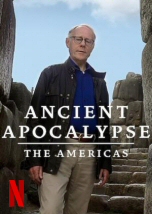
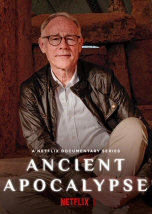







In episode one, evidence from New Mexico’s White Sands desert confirms the presence of people in the Americas long before it was possible to migrate across the Bering Straits that formed a land bridge during the lowered sea-levels of the Ice Age. The series takes us to multiple locations in the US, Mexico, Brazil, Peru and Easter Island to investigate when people first arrived in the “New World” and how they made the journey. The findings give Graham reason to question the accepted timeline of human history. During his journey, Graham interviews highly regarded archaeologists and historians as well as indigenous elders, who share their unique knowledge of the sites and their oral histories. Hollywood actor, Keanu Reeves, also joins Graham across the series, discussing, among other things, his insights into storytelling as an act of preserving culture. Experts in the series include American archaeologist Dr. Chris Davis, Brazilian palaeontologist Dr. Alceu Ranzi, and archaeo-botanist Dr. Sonia Cardinali of Rapa Nui, Easter Island, among others.