Brian Jones, Jimi Hendrix, Janis Joplin and Jim Morrison all died at the age of 27 between 1969 and 1971. At the time, the coincidence gave rise to some comment, but it was not until the death of Kurt Cobain, about two and a half decades later, that the idea of a '27 Club' began to catch on in public perception, reignited with the death of Amy Winehouse in 2011. Through interviews with people who knew them, such as music stars, critics, medical experts and unseen footage, the lives, music, and artistry of those who died at 27 are investigated with a bid to find answers.
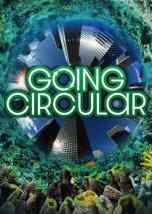
The documentary, an own production, immerses the viewer in a journey that blends science and philosophy, questioning the nature of time and unveiling a 4-dimensional universe, where space and time are integrated. We are invited to consider a universe in which past, present, and future coexist, suggesting that our linear perception of time might be more of a mental construction than a physical reality. The narrative progresses by exploring how quantum particles exist in states of probability until they are observed, at which point they acquire defined properties. Then, the provocative hypothesis is presented that observation also fixes the temporal dimension of the particles. The sensation of the flow of time and the distinction between past, present, and future are introduced as mental constructions, arising from the human brain's limited capacity to process the complexity of reality. It is then proposed that the mind, by observing itself, fixes itself in the temporal dimension, thus creating the illusion of the present. Finally, the impact of these theories on free will is discussed. This documentary challenges viewers to look beyond their everyday perceptions and consider the possibility that reality is much more complex and fascinating than our immediate experiences suggest. It is an invitation to explore the limits of science, philosophy, and the mind itself in search of answers to some of the deepest questions of existence.
More information on https://www.javier-serrano.blog/Ciencia/representacion_tridimensional_del_universo.php
The series explores the impact of racism on a global scale and chronicles the shifts in the perception of race and the history of racism in Europe, the Americas, Australia and Asia. The first episode begins by assessing the implications of the relationship between Europe, Africa and the Americas in the 15th century. It considers how racist ideas and practices developed in key religious and secular institutions, and how they showed up in writings by European philosophers Aristotle and Immanuel Kant.
In a world where the pursuit of health pushes us towards organic aisles and fresh produce, this film uncovers a chilling revelation: the very foods promoted for wellness might be our greatest peril. As we navigate grocery store aisles, seemingly benign items like romaine lettuce, cut fruit, and even infant formula hide tales of contamination and legal battles. This gripping exposé dives deep into the unsettling truth about our food, revealing risks where we least expect them. With every bite, we make choices about our health. But what if those choices, even the most well-intentioned ones, are not as safe as we believe? Poisoned: The Dirty Truth About Your Food challenges our perceptions and urges viewers to question: In the modern food landscape, is anything truly safe? The film is a truly call to action for the officials who have the power to mitigate the danger caused by foodborne pathogens that kill thousands of people every year.
The second part, Nothing, explores science at the very limits of human perception, where we now understand the deepest mysteries of the universe lie. Professor Jim Al-Khalili sets out to answer one very simple question - what is nothing? His journey ends with perhaps the most profound insight about reality that humanity has ever made. Everything came from nothing. The quantum world of the super small shaped the vast universe we inhabit today, and Jim can prove it.
In the last in the series Professor Jim Al-Khalili explores how studying the atom forced us to rethink the nature of reality itself. He discovers that there might be parallel universes in which different versions of us exist, finds out that empty space isn't empty at all, and investigates the differences in our perception of the world in the universe and the reality.











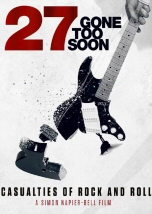











Through interviews with people who knew them, such as music stars, critics, medical experts and unseen footage, the lives, music, and artistry of those who died at 27 are investigated with a bid to find answers.