Last Watched

"Roman Empire"  Sort by

Art of Eternity: Painting Paradise

   2007    Art
How should art depict the relationship between man and God? How can art best express eternal values? Can you and should you portray the face of Christ? For over 1,000 years these were some of the questions which taxed the minds of the greatest artists of the early West. In this three-part series, art historian Andrew Graham-Dixon sets out to unravel the mysteries of art from the pre-perspective era". In the first episode, Andrew traces the beginnings of Christian art in the declining Roman Empire, Egypt and medieval France, and reveals the ideas which lay behind the transition
Series: Art of Eternity
Orthodoxy From Empire to Empire

   2011    Culture
In the third part of his journey into the history of Christianity, Professor Diarmaid MacCulloch charts Orthodoxy's extraordinary fight for survival. After its glory days in the eastern Roman Empire, it stood right in the path of Muslim expansion, suffered betrayal by crusading Catholics, was seized by the Russian tsars and faced near-extinction under Soviet communism. MacCulloch visits the greatest collection of early icons in the Sinai desert, a surviving relic of the iconoclastic crisis in Istanbul and Ivan the Terrible's cathedral in Moscow to discover the secret of Orthodoxy's endurance.
Series: A History of Christianity

The Story of India: Spice Routes and Silk Roads

   2007    History
In this episode he traces India in the days of the Roman Empire. In Kerala the spice trade opened India to the world, whilst gold and silk bazaars in the ancient city of Madurai were a delight for visiting Greek traders. From the deserts of Turkmenistan Michael travels down the Khyber Pass to Pakistan to discover a forgotten Indian Empire that opened up the Silk Route and at Peshawar built a lost Wonder of the World.
Series: The Story of India

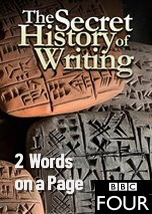
Words on a Page

   2020    History
Writing itself is 5,000 years old, and for most of that time words were written by hand using a variety of tools. The Romans were able to run an empire thanks to documents written on papyrus. Scroll books could be made quite cheaply and, as a result, ancient Rome had a thriving written culture. With the fall of the Roman Empire, papyrus became more difficult to obtain. Europeans were forced to turn to a much more expensive surface on which to write: Parchment. Medieval handwritten books could cost as much as a house, they also represent a limitation on literacy and scholarship.
No such limitations were felt in China, where paper had been invented in the second century. Paper was the foundation of Chinese culture and power, and for centuries how to make it was kept secret. When the secret was out, paper mills soon sprang up across central Asia. The result was an intellectual flourishing known as the Islamic Golden Age. Muslim scholars made discoveries in biology, geology, astronomy and mathematics. By contrast, Europe was an intellectual backwater.
That changed with Gutenberg’s development of movable type printing. The letters of the Latin alphabet have very simple block-like shapes, which made it relatively simple to turn them into type pieces. When printers tried to use movable type to print Arabic texts, they found themselves hampered by the cursive nature of Arabic writing. The success of movable type printing in Europe led to a thousand-fold increase in the availability of information, which produced an explosion of ideas that led directly to the European Scientific Revolution and the Industrial Revolution that followed.
Series: The Secret History of Writing

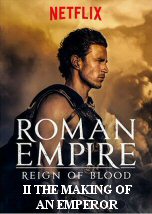
The Making of an Emperor

   2016    History
In the second episode of the series, the Germanic tribes strike as Marcus Aurelius succumbs to disease, leaving a skeptical Emperor Commodus to prosecute a war that doesn't interest him.
Series: Roman Empire: Reign of Blood

The Cambridgeshire Crucifixion

       History
The documentary tells the story of the extremely rare discovery of evidence of Roman crucifixion, unearthed in a routine archaeological dig in the Cambridgeshire Fens. When human remains were found alongside a variety of Roman artifacts, none of the team at Albion Archaeology saw anything out of the ordinary. But once the bones were washed back at HQ, something highly unusual was uncovered: a nail through the heel bone of one of the individuals. Could this be evidence of a Roman crucifixion? When they did some research, they found that only one confirmed example had ever been unearthed before, discovered in the 1960s in Jerusalem. To find out more, they called in renowned osteoarchaeologist Dr Corinne Duhig to investigate. With exclusive access to Corinne’s investigation and the remains themselves, The Cambridgeshire Crucifixion sets out to find out who this person was, how they lived and why they were put to death in this notoriously gruesome way. We perform a CT scan, DNA and isotope analysis of the remains, and use them to create a cutting-edge virtual autopsy of the skeleton, conducted by Corinne and one of her former students, biologist Prof Ben Garrod.
A supporting cast of expert contributors help to analyse the artefacts found at the Fenstanton site and reveal a compelling picture of life in Roman Britain in the 1st century CE. The film culminates in a world first: a full forensic facial reconstruction of a victim of Roman crucifixion, conducted by world-leading expert Joe Mullins.
How Earth Made Us

How Earth Made Us

2010  Science
Arnold

Arnold

2023  History
The Planets

The Planets

2000  Science
Dirty Money

Dirty Money

2018  Culture
Vegan

Vegan

2020  Culture
Dark Net

Dark Net

2016  Technology
Secrets of the Dead

Secrets of the Dead

2017  History