In the first episode, Sir David Attenborough reveals the unexpected wildlife riches of the British Isles, showcasing the dramatic and spectacular habitats that rival any across the globe. This journey uncovers the diversity of life in the UK's unique landscapes, from the intricate world of bumblebees to the swift lives of kingfishers. The episode captures extraordinary scenes of nature, including killer whales preying on seals, golden eagles in the Scottish mountains, the cunning tactics of woodland plants, and the perilous life of puffins evading gulls. It highlights Britain's geological diversity as a cornerstone of its natural wealth, contributing to an array of habitats and supporting a wide range of life. Britain's importance extends to being a haven for migratory birds, with our seas feeding 65% of the world's gannets and supporting the largest colony of northern gannets on Scotland's Bass Rock. The west coast of Scotland offers sanctuary to barnacle geese due to its abundant food and mild climate, though they remain vigilant against hunting sea eagles. Despite these natural treasures, Britain faces challenges as one of the most nature-depleted countries globally. Sir David Attenborough emphasizes the need to conserve and restore these wild isles for the enjoyment and benefit of future generations.
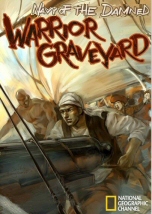
Recent archaeological sites in England offer a whole new perspective on the life and death of the seafarers and marines who built the British Empire in the 18th and 19th centuries. The bones of sailors reveal surprising and shocking facts. Apparently not only seasoned men but also half children did their service in the Royal Navy; according to the investigations, the youngest were no older than 13 years. A forensic archaeologist studies the injuries on bones discovered at the site of an battle and suggests how these people may have died. Three-hundred-and-fifty skeletons, exhumed from Royal Navy graveyards from the age of Nelson's Navy, are throwing an extraordinary new light on how these sailors lived, fought, outwitted their enemy, and, from the oldest to youngest, suffered for victory. These men were the beating heart of the most victorious fleet in history and never have so many of these sailors' remains been available for forensic investigation. Six remarkable stories stand out: the child sailor, the top man, the American gunner, the freed slave, the marine and the victim of the sailor's most dreaded disease: syphilis. Broken bones, amputations, injuries from blows with a saber or cutlass, sexually transmitted diseases, but also malnutrition - the list of causes of death is long. There is definitely no tale of seafaring romance. These fighters and sailors sailed the globe as cannon fodder, conquered an empire for the crown, and were themselves forgotten. No longer just bones in a box, the men of Nelson's Navy are back from the dead.
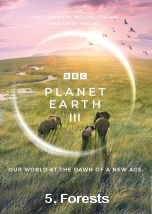
Journey to secret worlds where lives are wrapped in unexpected of ways. The fifth episode of the series takes viewers into the fascinating world of forests, revealing their hidden complexities and the intricate relationships within. Initially perceived as tranquil, forests are in fact bustling with life and intricate ecological interactions. The episode showcases various species, each with its unique lifestyle and survival strategies. Highlights include the Oriental pied hornbills in Borneo, whose extraordinary nesting rituals and partner dynamics are captivating. The Amazon rainforest is explored, introducing the peculiar treehoppers and their unique communication methods, vital for survival amidst numerous predators like ants and assassin bugs. The episode also delves into the intelligent and cooperative hunting techniques of dholes in the forests of India. The narrative takes a turn to China, focusing on the visually stunning courtship displays of Temminck's tragopans and golden pheasants. In the temperate rainforests of Western Canada, the rare spirit bear and its unique relationship with its habitat are examined. The episode concludes with an insightful look at the impact of human activity on forests and their inhabitants, particularly focusing on chimpanzees in Uganda, whose survival is increasingly intertwined with human expansion.
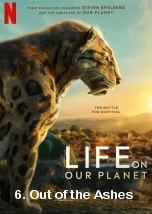
The sixth episode of the series narrates the fascinating story of the evolution and survival of life on our planet after the catastrophic event that marked the end of the era of dinosaurs, 66 million years ago. Through a visually stunning journey, we will see the impact of the meteorite and all its consequences in detail. We will also discover how the animals and plants that survived the mass extinction adapted, evolved, and diversified to fill the ecological niches left by the dinosaurs. From the first mammals and birds that emerged from the ashes to dominate the Earth, to the formation of complex ecosystems in the oceans and on land, the documentary offers a unique vision of the resilience and innovation of life on our planet. With impressive imagery and exciting stories, it reveals how life, against all odds, thrived after one of the most devastating events in Earth's history. This documentary is a testament to the unbreakable strength of life and its ability to adapt and flourish even in the most adverse conditions.
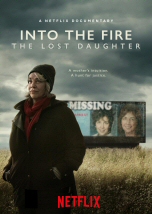
A stubborn mother tries to unravel the intricate mystery surrounding the 1989 disappearance of the daughter she gave up for adoption. Cathy learns in 2010 of the disappearance of her biological daughter, Aundria. She begins to search for answers that lead her to an unthinkable suspect. This is the story of a mother on a mission. The story of a mother's intuition in search of justice. ‘Into the Fire: The Lost Daughter’ is a compelling true saga that keeps viewers on the edge of their seats, inviting them to join Cathy’s emotional quest for answers. Now available on our site, you can watch both parts of this series in a single video.
In this final journey through our celestial neighborhood, Professor Brian Cox ventures beyond the familiar into the utterly bizarre. He uncovers a dwarf planet shaped like an egg that defies scientific logic, a tiny moon resembling a flying saucer, and a chilling ocean world locked in orbit around Jupiter. These strange and haunting places challenge everything we thought we knew about the solar system—making this the most mind-bending chapter of the series.














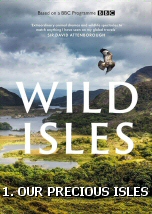






Britain's importance extends to being a haven for migratory birds, with our seas feeding 65% of the world's gannets and supporting the largest colony of northern gannets on Scotland's Bass Rock. The west coast of Scotland offers sanctuary to barnacle geese due to its abundant food and mild climate, though they remain vigilant against hunting sea eagles. Despite these natural treasures, Britain faces challenges as one of the most nature-depleted countries globally. Sir David Attenborough emphasizes the need to conserve and restore these wild isles for the enjoyment and benefit of future generations.