Salvador Dali's strange crucifixion is often called the greatest religious painting of the 20th century. Yet its artist was a notorious blasphemer some of whose work had outraged the Catholic Church. The Christ of St John of the Cross by Salvador Dali is the first of two extraordinary crucifixions painted by Dali in the early 1950s. The painting is based on a 'cosmic dream' Dali is said to have had, in which the nucleus of the atom was a figure of Christ himself. The painting offers a surrealist view of the crucifixion of Christ, and is based on a drawing by the 16th century Spanish friar Saint John of the Cross. But Dali's vision was somewhat unique, using an unusual artistic perspective in which Christ is seen from above. His Christ of St. John of The Cross was inspired by a weird mix of Spanish mysticism and nuclear physics, with his Christ being modelled by a Hollywood stuntman. It's also a masterpiece of painting technique.
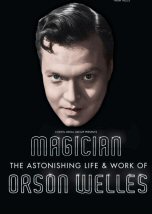
This documentary looks at the remarkable genius of Orson Welles on his centenary - the enigma of his career as a Hollywood star, a Hollywood director (for some a Hollywood failure), and a crucially important independent filmmaker. Orson Welles's life was magical: a musical prodigy at age 10, a director of Shakespeare at 14, a painter at 16, a star of stage and radio at 20, romances with some of the most beautiful women in the world, including Rita Hayworth. His work was similarly extraordinary, most notably Citizen Kane, (considered by many to be the most important movie ever made), created by Welles when he was only 25. In the years following Citizen Kane, Welles's career continued to change as he made film after film (some never finished, many dismissed) and acted in other projects often to earn money in order to keep making his own films. Magician features scenes from almost every existing Welles film, from Hearts of Age, (which he made in a day when he was only 18 years old) to rarely-seen clips from his final unfinished works like The Other Side of the Dream, The Deep, and Don Quixote, as well as his television and commercial work.
In 1971, after being rejected by Hollywood, Bruce Lee returned to his parents' homeland, Hong Kong. Over the next two years, he'd complete four iconic films that would define his legacy, a legacy cut short when he died, stunningly, in the summer of 1973. He was 32 years old. Directed by Bao Nguyen, 'Be Water' is a gripping, fascinating, intimate look at not just those final, defining years of Lee's life, but the complex, often difficult, and seismic journey that led to Lee's ultimate emergence as a singular icon in the histories of film, martial arts, and even the connection between the eastern and western worlds. The film chronicles Lee's earliest days, as the son of a Chinese opera star born while his father was on tour in San Francisco, and then raised in Hong Kong over what became an at times troubled childhood. Sent to live in America at the age of 18, he began teaching Kung Fu in Seattle, and established a following that included his future wife, Linda. His ambition ever rising, Lee eventually made his way to Los Angeles, where he strove to break into American film and television. There, despite some success as a fight choreographer and actor, it was clear Hollywood wasn't ready for an Asian leading man - and so he returned to Hong Kong to make the films that would in fact make him a legend, his international star skyrocketing just as his life was cut short. 'Be Water' is told by the family, friends, and collaborators who knew Bruce Lee best, with an extraordinary trove of archive film providing an evocative, immersive visual tapestry that captures Lee's charisma, his passion, his philosophy, and the eternal beauty and wonder of his art.
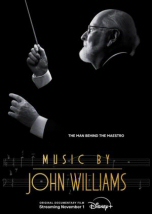
The film takes viewers on an enchanting journey through the life and legendary career of one of cinema's greatest composers. Directed by John Williams' longtime friend Laurent Bouzereau, it delves deeply into the music that has defined iconic film franchises like “Star Wars”, “Jurassic Park”, and “Harry Potter”. Featuring interviews with esteemed artists and filmmakers profoundly influenced by Williams' timeless compositions, the film explores his extraordinary ability to bring emotion, depth, and grandeur to the screen through his symphonic genius. Archival footage and behind-the-scenes moments illustrate how his unforgettable scores became integral to the movies, revealing just how vital his contributions have been to modern cinema. This intimate tribute captures Williams’ journey from jazz pianist to cultural icon, showcasing the groundbreaking impact of his classical compositions in Hollywood and beyond. From his collaborative masterpieces with Steven Spielberg and George Lucas to his unique approach of composing by hand, "Music By John Williams" highlights the relentless passion and meticulous craft that have defined his career. Personal stories from colleagues, friends, and family, along with moments of Williams conducting before adoring fans, paint a vivid portrait of a man who has shaped our cinematic experiences for over half a century. For anyone captivated by the power of music in film, this documentary is an inspiring and nostalgic celebration of an unparalleled legacy.
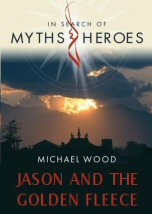
The Greek tale of Jason and the Golden Fleece has been told for 3,000 years. It's a classic hero's quest tale - a sort of ancient Greek mission impossible - in which the hero embarks on a sea voyage into an unknown land, with a great task to achieve. He is in search of a magical ram's fleece, which he has to find in order to reclaim his father's kingdom of Iolkos from the usurper King Pelias. Michael Wood discovers a story of heroism, treachery, love and tragedy that would make Hollywood proud.
When Mariska Hargitay was just three years old, her mother’s life was cut short in a devastating car crash. Decades later, she embarks on a profoundly personal journey to piece together the story of the woman behind the Hollywood legend. Through revealing interviews and an extraordinary archive of rare home movies and photographs, she confronts the myths and contradictions surrounding her mother’s image. As the layers peel back, a portrait emerges that is both glamorous and deeply human—a mother, a star, and a woman whose impact endures. This is an unflinching exploration of loss, legacy, and the longing to finally understand the person who shaped her life from afar.

















The painting offers a surrealist view of the crucifixion of Christ, and is based on a drawing by the 16th century Spanish friar Saint John of the Cross. But Dali's vision was somewhat unique, using an unusual artistic perspective in which Christ is seen from above. His Christ of St. John of The Cross was inspired by a weird mix of Spanish mysticism and nuclear physics, with his Christ being modelled by a Hollywood stuntman. It's also a masterpiece of painting technique.