The 8th episode reviews Giovanni Cassini's life. His observations of Saturn and its moons would have an enduring effect on the scientific world. Neil deGrasse Tyson also narrates the mysterious untold story of the scientist who figured out how to go the Moon while fighting for his life in a WWI trench. Aleksandr Shargei changed his name to Yuri Kondratyuk out of fear for his life and wrote a manuscript on rocket motion and space colonization. This letter would end up capturing the attention of an engineer working on the Apollo program, John Houbolt, and would made the Apollo Mission possible. We will also know the saga of the twenty-year long odyssey of Cassini-Huygens spacecraft, a robotic explorer ordered to commit suicide on another world.
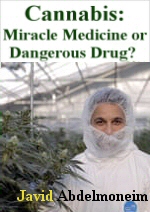
At an extraordinary moment in the history of one of the world’s oldest and most controversial drugs, Dr Javid Abdelmoneim investigates the very latest medical and scientific research into the effects of cannabis on the brain and the body, to find out whether it will help or harm patients. Javid meets the young epilepsy patient responsible for changing the law around medicinal cannabis in the UK and sees the remarkable effects it has on his condition. He visits a medicinal cannabis farm in Denmark to learn how a company known for growing the recreational drug are now producing medicinal cannabis to be exported all over Europe. He travels to Israel, to find out why they have been using cannabis as a medicine for over 20 years and meets the scientists studying the safety and effectiveness of cannabis in treating pain. And he meets the so-called godfather of cannabis, who at 88 years old is still an active research scientist and considered the world’s leading cannabis expert.
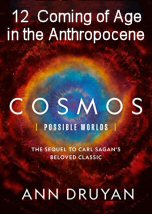
At 11 o'clock on New Year's Eve of the Cosmic Calendar, Homo erectus stood up for the first time, freeing its hands and earning the species its name. They began to move around, to explore, daring to risk everything to get to unknown places. Our Neanderthal relatives lived much as we did and did many of the things we consider to be 'human.' More restless than their cousins the Neanderthals and Denisovans, our Homo sapiens ancestors crossed seas and unforgiving landscapes, changing the land, ocean and atmosphere, leading to mass extinction. The scientific community gave our age a new name, 'Anthropocene.' Since the first civilizations we've wondered if there's something about human nature that contains the seeds of our destruction. Syukuro Manabe was born in rural Japan and took an intense interest in Earth's average global temperature. In the 1960's, he would assemble the evidence he needed to predict the increase of Earth's temperature due to greenhouse gases until it becomes an uninhabitable and toxic environment, leading to our extinction. 'This doesn't have to be,' says Neil deGrasse Tyson, 'it's not too late. There's another hallway, another future we can still have; we'll find a way.'
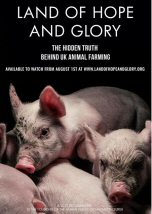
The film is made by the founders of the animal rights organisation Surge: In 2005, a film called Earthlings became the most pivotal documentary of the animal rights movement. Here in the UK however, we found the phrase 'that doesn't happen in our country' coming up far too much. We wanted to set the record straight. Through Land of Hope and Glory we aim to show the truth behind UK land animal farming by featuring the most up to date investigations as well as never before seen undercover footage, with a total of approximately 100 UK facilities featured throughout the film.
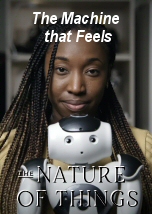
The film explores how artificial intelligence (AI) is catching up to us in ways once thought to be uniquely human: empathy, emotional intelligence and creativity. AI has the potential to reshape every aspect of our world – but most of us are unaware of what looms on the horizon. This documentary shows viewers what they need to know about a field that is advancing at a dizzying pace, often away from the public eye. Have AI the power to disconnect us from fellow humans? What does it mean when AI makes art? Can really AI interpret and understand human emotions? How is it possible that AI creates sophisticated neural networks that mimic the human brain? The documentary includes interviews with global leaders, commentators and innovators from the AI field, including Geoff Hinton, Yoshua Bengio, Ray Kurzweil and Douglas Coupland, who highlight some of the innovative and cutting-edge AI technologies that are changing our world.
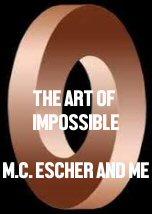
Sir Roger Penrose is more than just a fan of MC Escher's mind-bending art. During the course of a long creative collaboration, the British mathematician and the Dutch artist exchanged ideas and inspirations. Some of Escher's most iconic images have their origin in Penrose's mathematical sketches - while the artist's work has served as a starting point for the professor's own explorations of new scientific ideas". To coincide with the first ever Escher retrospective in the UK, Penrose takes us on a personal journey through Escher's greatest masterpieces - marvelling at his intuitive brilliance and the penetrating light it still sheds on complex mathematical concepts.














We will also know the saga of the twenty-year long odyssey of Cassini-Huygens spacecraft, a robotic explorer ordered to commit suicide on another world.