Last Watched

"Modern"  Sort by

Sisters of the Sun

   2014    Science
The constellation of the Pleiades provides a vehicle for us to explore a series of paradoxes and epochal discoveries for humanity. The untold story of the modern "sisters of the sun," the early 20th century female astronomers, led by two deaf women, at Harvard who catalogued the stars. It's also the story of the young British woman who joined forces with them, her defiance of the world's leading expert, and how she taught the world what the stars are really made of.
Series: Cosmos: A Spacetime Odyssey
The Electric Boy

   2014    Science
This episode provides an overview of the nature of electromagnetism, as discovered through the work of Michael Faraday. Tyson explains how the idea of another force of nature, similar to gravitational forces, had been postulated by Isaac Newton before. Tyson continues on Faraday, coming from poor beginnings, would end up becoming interested in studying electricity after reading books and seeing lectures by Humphry Davy at the Royal Institution. Davy would hire Faraday after seeing extensive notes he had taken to act as his secretary and lab assistant. After Davy and chemist William Hyde Wollaston unsuccessfully tried to build on Hans Christian Ørsted's discovery of the electromagnetic phenomena to harness the ability to create motion from electricity, Faraday was able to create his own device to create the first electric motor by applying electricity aligned along a magnet. Davy, bitter over Faraday's breakthrough, put Faraday on the task of improving the quality of high-quality optical glass, preventing Faraday from continuing his research. Faraday, undeterred, continued to work in the Royal Institution, and created the Christmas Lectures designed to teach science to children. Following Davy's death, Faraday returned to full time efforts studying electromagnetism, creating the first electrical generator by inserting a magnet in a coil of wires. Tyson continues to note that despite losing some of his mental capacity, Faraday concluded that electricity and magnetism were connected by unseen fields, and postulated that light may also be tied to these forces. Using a sample of the optical glass that Davy had him make, Faraday discovered that an applied magnetic field could affect the polarization of light passing through the glass sample (a dielectric material), leading to what is called the Faraday effect and connecting these three forces. Faraday postulated that these fields existed across the planet, which would later by called Earth's magnetic field generated by the rotating molten iron inner core, as well as the phenomena that caused the planets to rotate around the sun. Faraday's work was initially rejected by the scientific community due to his lack of mathematical support, but James Clerk Maxwell would later come to rework Faraday's theories into the Maxwell's equations that validated Faraday's theories. Their combined efforts created the basis of science that drives the principles of modern communications today.
Series: Cosmos: A Spacetime Odyssey

When Knowledge Conquered Fear

   2014    Science
The episode begins with Tyson describing how pattern recognition manifested in early civilization as using astronomy and astrology to predict the passing of the seasons, including how the passage of a comet was often taken as an omen. Tyson continues to explain that the origin of comets only became known in the 20th century due to the work of Jan Oort and his hypothesis of the Oort cloud. Tyson then continues to relate the collaboration between Edmond Halley and Isaac Newton in the last part of the 17th century in Cambridge. The collaboration would result in the publication of Philosophiæ Naturalis Principia Mathematica, the first major work to describe the laws of physics in mathematical terms, despite objections and claims of plagiarism from Robert Hooke and financial difficulties of the Royal Society of London. Tyson explains how this work challenged the prevailing notion that God had planned out the heavens, but would end up influencing many factors of modern life, including space flight. Tyson further describes Halley's contributions including determining Earth's distance to the sun, the motion of stars and predicting the orbit of then-unnamed Halley's Comet using Newton's laws. Tyson contrasts these scientific approaches to understanding the galaxy compared to what earlier civilizations had done, and considers this advancement as mankind's first steps into exploring the universe. The episode ends with an animation of the Milky Way and Andromeda galaxies' merging based on the principles of Newton's laws.
Series: Cosmos: A Spacetime Odyssey
Once Upon a Time

   2006    Art
The power of visual storytelling is not a modern phenomenon, feature films today are using techniques developed way back in the distant past. For thousands of years, artists grappled with ways to bring their stories alive, to engage their audience. This is the story of how our ancient ancestors made the discoveries that have given films such a hold over our imaginations.
Series: How Art Made the World

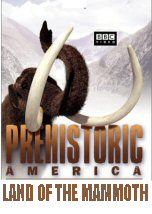
Land Of The Mammoth

   2003    Nature
Journey through the long-vanished corners of prehistoric North America, beginning when man first entered the vast, unspoiled continent some 14,000 years ago, in this appealing BBC documentary. Witness ancient beasts, mammoths, mastodons, giant bears, and sabre-toothed cats, and see the legacies each has passed to their modern successors. Computer animation and digital effects bring to life mammoths, saber-toothed cats, giant ground sloths, short-faced bears, glyptodonts, and a plethora of smaller animals in a lush Ice Age mosaic.
Series: Prehistoric America

From Pictures to Words

   2020    History
We take it for granted, but every time we pick up a pen or type on the keyboard, we are employing the most powerful technology ever invented: the technology of writing. Explore how the invention of writing gave humanity a history. From hieroglyphs to emojis, the series is an exploration of the way in which the technology of writing has shaped the world we live in.
The invention of writing about 5,000 years ago made civilization itself possible, and every innovation of the modern world is based on the foundation of the written word. But how and where did writing begin, and who began it? In From Pictures to Words, the first of three films about the history of writing, we uncover the hidden links between all the diverse writing systems in use today and trace the origin of our own alphabet to a turquoise mine in the Sinai Desert and a man riding a donkey whose name was Khebded.
Series: The Secret History of Writing
The Germanic Tribes

The Germanic Tribes

2007  History
Human Universe

Human Universe

2014  History
Sex Explained

Sex Explained

2020  Medicine
How to Grow a Planet

How to Grow a Planet

2012  Science
Tiger

Tiger

2020  History
The Last Dance

The Last Dance

2020  Culture