The film captures de life of Valerie Taylor, a living legend and true pioneer in both underwater filmmaking and shark research. Valerie work has became the basis for much of what we know about sharks today. Through remarkable underwater archival footage, along with interviews with Valerie herself, 'Playing with Sharks' follows this daring ocean explorer's trajectory from champion spear fisher to passionate shark protector.
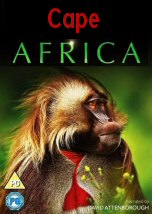
Southern Africa is a riot of life and colour because of two great ocean currents that sweep around the continent's Cape. To the east, the warm Agulhas current generates clouds that roll inland to the wettest place in southern Africa. To the west is the cold Benguela current, home to more great white sharks than anywhere else. Moisture laden fog rolls inland, supporting an incredible desert garden. Where the two currents meet, the clash of warm and cold water creates one of the world's most fabulous natural spectacles - South Africa's sardine run. This is the greatest gathering of predators on the planet, including Africa's largest, the Bryde's whale.
Immense shoals of fish throng our shallow seas. Small fish, in turn, sustain bigger ones. The rich coastal seas are the fishing grounds of our planet and can provide an abundance of food for wildlife and humanity. The seas fringing land make up less than a tenth of the world's oceans but 90 percent of marine creatures live in coastal waters, from fearsome sharks to lowly urchins. Protecting these habitats is a battle humanity must win.
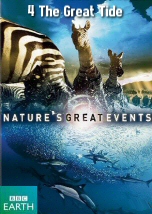
A mighty army of dolphins, sharks, whales, seals and gannets hunt down the billions of sardines along South Africa's east coast each winter. This is the Sardine Run: an underwater Armageddon, the greatest gathering of predators anywhere on the planet, and the most spectacular event in the world's oceans. From intimate moments of the creatures caught up in the run, to the dramatic finale of this spectacular event, The Great Tide is an action-packed feeding-frenzy, filmed underwater, on the ocean's surface, and in the air. However, in recent years the sardine run has become less predictable, perhaps due to the warming effects of climate change. If the sardine run does not happen, the lives of the animals caught up in the drama hang in the balance. Pioneering a unique boat stabilised camera mount for surface filming, Nature's Great Events crew capture all the high octane action as the predators compete for sardines, filmed with aerial, underwater and above water cameras. Super slow motion cameras also capture the very moment gannets plunge into the water, hitting it at sixty miles an hour. A violent winter storm is the trigger for the sardines to begin their desperate dash. They are followed by a super-pod of 5,000 dolphins and further up the coast more predators gather. A shoal of sardines 15 miles long is pushed into the shallows and aerial shots show thousands of sharks gathering to feed on them. The climax to the sardine run is a spectacular feeding frenzy as the dolphins round the sardines up into balls on which all the predators feast. Gannets rain down in their thousands, sharks pile in scattering the fish and a Bryde's whale lunges in taking great mouthfuls of sardines.
Far from land, where few of us ever venture, is the ocean beyond the boundary of any country. Largely ungoverned, wild, and lawless. Venture into the deep, dark and desolate oceans that are home to an abundance of beautiful - and downright strange - creatures.
Brian explores the physics of the size of life through some close encounters with Australia's wildlife. From swimming with great white sharks to tracking red kangaroos, he discovers that the size you are profoundly affects the life you lead and, ultimately, how long you have to enjoy it.









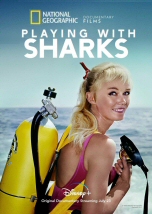










Through remarkable underwater archival footage, along with interviews with Valerie herself, 'Playing with Sharks' follows this daring ocean explorer's trajectory from champion spear fisher to passionate shark protector.