The great flood in the Okavango turns 4,000 square miles of arid plains into a beautiful wetland. Elephant mothers guide their families on an epic trek across the harsh Kalahari Desert towards it, siphoning fresh water from stagnant pools and facing hungry lions. Hippos battle for territory, as the magical water draws in thousands of buffalo and birds, and vast clouds of dragonflies. Will the young elephant calves survive to reach this grassland paradise? The experienced mother elephants time their arrival at the delta to coincide with the lush grass produced by the great flood. In a TV first, the programme shows the way they use their trunks to siphon clean water from the surface layers of a stagnant pool, while avoiding stirring up the muddy sediment on the bottom with their feet. Lechwe swamp deer, zebras, giraffes, crocodiles and numerous fish and thousands of birds arrive in the delta. And, in a phenomenon never before filmed in the Okavango, thousands of dragonflies appear - seemingly from nowhere - within minutes of the flood arrival, mating and laying eggs. As the flood finally reaches its peak, elephants and buffalo, near the end of their epic trek across the desert, face the final gauntlet of a hungry pride of lions. In a heart-wrenching sequence, a baby elephant is brought down by a lion in broad daylight.
D-Day: As It Happens is a 24-hour history event to be broadcast across TV, web, mobile devices and social media, telling the story of this pivotal event in 20th-century history in a completely new way. Using newly-analysed archive footage, viewers can track the progress of seven people who were there on the day, each of them a real participant in the 1944 invasion. And they can do so moment by moment in real time, encountering the twists and turns of the fighting at the same time as the D-Day seven did, and learning their fate as the action unfolds in parallel with the present, Narrated by Peter Snow, with Channel 4 presenter and former marine Arthur Williams, and experts including former British Army officer Colonel Tim Collins and front-line journalist Lorna Ward. The second programme reveals what happened to the seven real people the event is following in real time, and also rounds up the events of D-Day.
Dylan Jones is in the driving seat for this authoritative four-part look back. No stone remains unturned, as he revisits the New Romantics, rap, modern dance music, hip-hop, indie jingle, synth-pop, house music and club culture. He makes the case that the 1980s was the most radical, innovative and creative decade in the history of pop because, unlike other decades, unleashed a myriad of new musical genres in just 10 years. In the first part, Dylan Jones explores how in this decade the world-conquering genres of rap, hip-hop and modern dance music were launched, while guitar-driven indie flourished in a constellation of scenes spread out across the world. And a technological revolution was changing how music was made, filling the charts with a starburst of innovative records. Meanwhile, the launch of MTV turned pop into a visual medium, allowing artists as varied as U2 and Eurythmics to take charge of how they presented themselves. Featuring interviews with Nile Rodgers, Bananarama, Primal Scream's Bobby Gillespie, Mark Ronson, Trevor Horn and Soul II Soul's Jazzie B.
Time i s a concept which is so familiar, and yet recent discoveries have revealed it to be far stranger than we could have possibly imagined. In the final programme in the series, Brian explores the enigma of time - a phenomenon we take for granted but which is one of the biggest mysteries in the universe. He recalls highlights from his TV series that touch upon this conundrum.
The film recounts the story of the 100th Bomb Group during World War II and follows bomber crews on dangerous missions to destroy targets inside German-occupied Europe. The Documentary honors the heroes of the Group and portrays the intensity of war, the dangers that the airmen face, and the friendships and relationships that develop. This unit from the Eighth Air Force B-17 Flying Fortress suffered tremendous losses in combat, with 177 aircraft missing in action, flying its last mission on 20 April 1945. Meet the airmen who inspired the tv series 'Masters of the Air' as they share the harrowing and transformative events of the 100th Bomb Group. The interviews with the real-life heroes are revealing, and the wealth of newsreel footage compiled in the documentary is utilized with a sharp eye for detail.
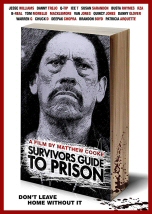
'It's really about terror and intimidation and people basically fighting for survival and often committing extraordinary violence in order to protect themselves or to stay safe. It's kind of like the weak dog in the pack. If others spot weakness, they're gonna pounce on you for a couple of reasons. You pounce on that guy, that gives you a little more status. So, I had to ask myself, are you gonna be a victim? No, I ain't gonna be a victim. Well, that really only left me one choice in my mind. That means I gotta be the victimizer. At some point, for some reason, might be legitimate, might not be, someone's gonna test you.. Even if you lose, you're gonna have to stand up for yourself. ' 'A guy comes over, and it's your day to get your package, and he tries to take your package from you that your people sent you, if you let him do it, there's gonna be 10 other dudes, oh, yeah, he let that guy take his package, I'm gonna go get his TV, right down the line until somebody's after your ass. But if you stand up that first time and they see you'll stand up for yourself, even if you lose, people will respect that. Oh, don't mess with him. There's easier prey. Why do you have to go and get that guy and get a couple lumps for it when he can go get that guy's stuff over there, don't cost you nothing. It usually only has to happen once or twice but just as importantly that you didn't go to the man for help... you're gonna be all right.'





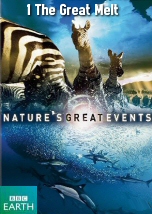





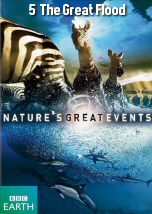











In a TV first, the programme shows the way they use their trunks to siphon clean water from the surface layers of a stagnant pool, while avoiding stirring up the muddy sediment on the bottom with their feet. Lechwe swamp deer, zebras, giraffes, crocodiles and numerous fish and thousands of birds arrive in the delta. And, in a phenomenon never before filmed in the Okavango, thousands of dragonflies appear - seemingly from nowhere - within minutes of the flood arrival, mating and laying eggs. As the flood finally reaches its peak, elephants and buffalo, near the end of their epic trek across the desert, face the final gauntlet of a hungry pride of lions. In a heart-wrenching sequence, a baby elephant is brought down by a lion in broad daylight.