At the very end of East Africa's Great Rift Valley, there's a 'land that time forgot'--the rolling grasslands of the Luangwa Valley. Seemingly untouched plains teem with Africa's most iconic animals. Some are unique to this place, others are critically endangered elsewhere. Here, prey exist in remarkable balance, each taking advantage of the secret at the heart of this Eden, the mighty Luangwa River and its dramatic annual transformation from dusty inferno to emerald paradise.
The Namib Desert is one of the oldest deserts and also one of the most diverse. With 50ºC (120ºF) temperatures and half a millimetre of rainfall annually, we see how this is possible. Half the size of Oklahoma, from its Skeleton Coast through the sea of sand to the haze of distant mountains this apparently forbidding desert hides secret water sources.
In this captivating final episode of the series we meet some incredible conservation champions on nature's front line, fighting to preserve the future of our beautiful planet. The episode opens with a dramatic rescue operation for the critically endangered black rhino, showcasing the efforts of Dumi Zwane and his team to establish a new breeding colony in a safe haven. The focus then shifts to the Centro Jambatu research center in the Andes, where Jaime Culebras works tirelessly to save the last of certain frog species. The documentary also highlights the efforts of Trang Nguyen, who bravely infiltrates the illegal wildlife trade in West Africa to protect forest elephants from ivory poachers. Meanwhile, in Vienna, Katharina Huchler undertakes a remarkable journey to reintroduce the northern bald ibis to Europe after its extinction 400 years ago. Indigenous leader Alessandra Korap's battle to preserve the Amazon rainforest from exploitation is a key focus, alongside Mohamed Nasheed's fight against climate change to save coral reefs and his country. This episode addresses the broader issue of habitat destruction, emphasizing its role as a primary driver of extinction. It poignantly demonstrates the interconnectivity of life on Earth and the critical importance of conservation efforts.
The last episode of the series showcases Africa, home to the greatest wildlife gatherings on earth and vast ecosystems. It delves into the lives of intelligent chimpanzees using tools in Ivory Coast, and the diverse cichlid fish in the Great Rift Valley's lakes. The film also explores the survival strategies of animals in the Namib Desert, including the brown hyena and the aardvark. But even in this land of plenty, wildlife faces huge challenges. Crucially, it is addressed the impact of climate change and human activities, highlighting the plight of endangered species like the northern white rhinoceros and the decreasing populations of elephants and cheetahs due to poaching. However, it also offers hope, illustrating successful conservation efforts like the recovery of the mountain gorilla population in Virunga National Park. The documentary is a vivid reminder of the richness of African wildlife and the urgent need for conservation efforts to preserve our planet's biodiversity.
The third episode takes viewers on a riveting journey to some of the world's most extreme and breathtaking deserts and grasslands, where nature puts on its most dramatic show. It begins in the arid landscapes of Central Africa's Guelta d'Archei and the Namib Desert in Southwest Africa, places where water is scarce, and survival is a daily battle. The focus then shifts to the remarkable adaptability of creatures like ostriches, who brave the scorching heat and predators to raise their young and a handful of leopards who learned to hunt from trees on the African plains. In Australia, viewers witness the intricate courtship rituals of the spotted bowerbird, a species facing challenges due to climate change. The narrative then takes us to the vast Eurasian Steppe, home to the unique Saiga antelope, and to Brazil's Cerrado, a biodiverse grassland where the elusive maned wolf plays a crucial role in maintaining the ecosystem. The episode highlights not only the resilience and beauty of these creatures but also the fragility of their habitats, emphasizing the urgent need for conservation efforts.
When animals can tap into remarkable senses and supernatural skills, crossing the globe, even moving between worlds to find a mate, safety and food, they become truly unstoppable.













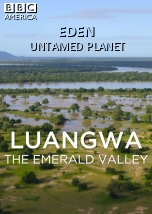





Here, prey exist in remarkable balance, each taking advantage of the secret at the heart of this Eden, the mighty Luangwa River and its dramatic annual transformation from dusty inferno to emerald paradise.