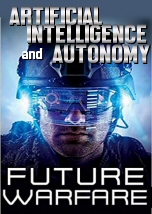
Technology is defining the future of warfare, providing capabilities that were previously unreachable. Every technological leap redraws the battle lines we once knew. The future of warfare lies beyond battlefields to the uncharted reaches of outer space, and even to the digital realm. In the first episode, artificial intelligence and autonomy are no longer just the field of science fiction; they are a key part of the fourth industrial revolution, and successfully harnessing the power of this new technology will be integral to the success of future warfare.
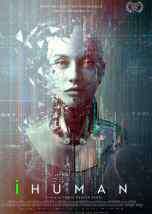
The documentary delves into the captivating world of Artificial Intelligence, exploring its rapid advancements, societal impact, and ethical dilemmas. Through interviews with experts, it highlights the potential for AI to learn like humans, revolutionizing our work and creations. It also raises critical questions about its regulation, the dangers of military applications, and the need for international cooperation. This thought-provoking documentary offers a deep dive into the AI revolution and the profound implications it holds for our future, making it a must-watch for anyone intrigued by the intersection of technology, ethics, and society. iHUMAN is a political thriller about artificial intelligence, power and social control. With unparalleled access to the inside of the booming AI industry, this film shows how the most powerful and far-reaching technology of our time is changing our lives, our society and our future.
A single microscopic brain cell cannot think, is not conscious, but if you bring in a few more brain cells, and a few more, and connect them all, at a certain point, the group itself will be able to think and experience emotions and have opinions and a personality and know that it exists. How can such astonishing things be made from such simple ingredients? Well, answering that question means learning not only who we are but, more importantly, how we are. Today, using what neuroscientists know so far, we are going to make a town function like a brain, using people as neurons.
The human eye can see extraordinary detail, but the eye of a needle held at arm's length is pretty much at the limit of our vision. Anything smaller is simply invisible, at least to the naked eye. But what if we could see this hidden world all around us in greater detail and magnification than ever before? How different would our familiar surroundings then seem? Richard Hammond explores the astonishing miniature universe all around us, revealing that small is not only beautiful, it can also be very, very powerful. From seeing the microscopic changes to ice crystals that can trigger an avalanche to watching in horror the invisible aftermath of a sneeze on a commuter train and learning how the surface of an ordinary-looking plant hides an astounding secret that will make walking on the moon safer, Richard harnesses cutting-edge technologies to transport the viewer into a spectacular micro realm.
From fears about work and privacy to a rivalry between the U.S. and China, the series explores the promise and perils of AI. It traces a new industrial revolution that will reshape and disrupt our lives, our jobs and our world, and allow the emergence of the surveillance society. Today, China leads the world in e-commerce and is a society that bypassed credit cards. Now shops in stores are without cashiers, where the currency is facial recognition. No country has ever moved that fast. And in a short two-and-a-half years, China's A.I. implementation really went from minimal amount to probably about 17 or 18 unicorns, that is, billion-dollar companies. The progress was powered by a new generation of ambitious young techs pouring out of Chinese universities, competing with each other for new ideas, and financed by a new cadre of Chinese venture capitalists.
What are the latest discoveries in the deadly world of asteroids? Will a recently returned Japanese spacecraft become the first to bring an asteroid sample back to our planet? What would happen to America's East Coast if the massive asteroid impact that helped form Chesapeake Bay 35 million years ago struck today? And why did President Barack Obama choose an asteroid as the destination for the next great manned mission into space? Learning about these huge space rocks isn't just about science, it's about survival.





















In the first episode, artificial intelligence and autonomy are no longer just the field of science fiction; they are a key part of the fourth industrial revolution, and successfully harnessing the power of this new technology will be integral to the success of future warfare.