Years after he changed the landscape of filmmaking with The Exorcist, filmaker and writer William Friedkin moves from fiction to fact with this documentary. What began as a brief conversation between Friedkin and Father Gabrielle Amorth - the head Exorcist for the Diocese of Rome for over 30 years - as two professionals who knew of each other's work, soon transformed into an once-in-a-lifetime opportunity, as Amorth agreed Friedkin could film an exorcism ceremony. It would be the ninth exorcism for a painfully afflicted woman, and it would be filmed by Friedkin alone, with no other crew allowed, no light other than the natural light in the room and a small digital camera-and-mic unit that could capture the ritual and its revelations. Combining the startling and singular footage from Cristina's exorcism with interviews from priests and psychologists, neurosurgeons and non-believers, Friedkin guides us on a journey into the twilight world between the boundaries of what we know and what we don't.
Changing diets and dramatic price swings have put dairy farmers on the ropes and fueled a surge in lucrative but controversial raw milk sales. Proponents of raw milk have stated that there are benefits to its consumption, including better flavour, better nutrition, and the building of a healthy immune system. However, the medical community has warned of the dangers, which include a risk of infection, and has not found any clear benefit
Since the original series went on the air in 1966, the Star Trek franchise has had a history of ups and downs in the toy business - from AMT's faithful scale model kit of the USS Enterprise to Remco's obscure tie-in merchandise, to Mego's best–selling action figure line. Following Mego's bankruptcy in 1983 and a string of flops by Ertl and Galoob, Playmates Toys picked up the toy license in the late 1980s and sparked a resurgence in the franchise's toy sales. From the mid-2000s onwards, companies such as Art Asylum and McFarlane Toys continue to keep the Star Trek toy franchise alive.
Between 1850 and 1950, three cataclysmic revolutions shook China to the core, but out of them, today's China emerged. The film begins in Canton with the meeting of a US missionary and a Chinese student. Inspired by the Christian story and calling himself God's second son, Hong unleashed the bloodiest war of the 19th century, the Taiping Rebellion. As imperial China weakened, foreign influence grew. Treaty ports expanded, bringing growth and wealth, trams, railways and western sensibilities. But this provoked another surge of violence, the Boxer Rebellion, an attack against the foreigners, which was crushed by those same foreigners, who extorted a huge indemnity - $60 billion in today's money. Then in 1912, the empire fell, and many groups contested China's future. In World War I, China sent 100,000 men to the western front, only to be humiliated at Versailles when German colonies in China were handed to Japan. Between the two world wars, the disparity between rich and poor, city and countryside increased. We visit Hong Kong's Peninsular Hotel in the jazz age and then follow Mao on the Long March to Yan'an, the heartland of revolution. World War II came to China two years earlier than it did in the west. Wood talks to a survivor of the Japanese massacre of Nanjing in 1937 and then charts the triumph of the communists, before ending the story with Mao's death and the boom time of the last 30 years. The series ends with the warmth of the Chinese family and, at Beijing's Altar of Heaven, a final haunting glimpse of eternal China.
The film is made by the founders of the animal rights organisation Surge: In 2005, a film called Earthlings became the most pivotal documentary of the animal rights movement. Here in the UK however, we found the phrase 'that doesn't happen in our country' coming up far too much. We wanted to set the record straight. Through Land of Hope and Glory we aim to show the truth behind UK land animal farming by featuring the most up to date investigations as well as never before seen undercover footage, with a total of approximately 100 UK facilities featured throughout the film.
The terrorist group Boko Haram is responsible for thousands of deaths in Nigeria. Now, the government is determined to drive these militants from the country. But is the hunt for insurgents causing as much harm as it's preventing? Former Navy SEAL and new VICE correspondent Kaj Larsen travels to Nigeria to see what this cat-and-mouse game means for the people caught in the middle of the fight.
'Unnatural Selection': For centuries, scientists have been working to change the genetic traits of plants and animals. Now, the new gene-editing method CRISPR has made that process astonishingly simple - so simple it could easily be used on humans. Isobel Yeung reports from Brazil, Scotland, China and the U.S. on the technological advances that could reshape evolution as we know it.







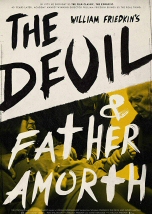







Combining the startling and singular footage from Cristina's exorcism with interviews from priests and psychologists, neurosurgeons and non-believers, Friedkin guides us on a journey into the twilight world between the boundaries of what we know and what we don't.