

Last Watched

"Roma"  Sort by

A Sky Full of Ghosts

   2014    Science
Tyson begins the episode by explaining the nature of the speed of light and how much of what is seen of the observable universe is from light emanated from billions of years in the past. Tyson further explains how modern astronomy has used such analyzes via deep time to identify the Big Bang event and the age of the universe. Tyson proceeds to describe how the work of Isaac Newton, William Herschel, and James Clerk Maxwell contributed to understanding the nature of electromagnetic waves and gravitational force, and how this work led towards Albert Einstein's Theory of Relativity, that the speed of light is a fundamental constant of the universe and gravity can be seen as distortion of the fabric of space-time. Tyson describes the concept of dark stars as postulated by John Michell which are not visible but detectable by tracking other stars trapped within their gravity wells, an idea Herschel used to discover binary stars. Tyson then describes the nature of black holes, their enormous gravitational forces that can even capture light, and their discovery via X-ray sources such as Cygnus X-1. Tyson uses the Ship of Imagination to provide a postulate of the warping of spacetime and time dilation as one enters the event horizon of the black hole, and the possibility that these may lead to other points within our universe or others, or even time travel. Tyson ends on noting that Herschel's son, John would be inspired by his father to continue to document the known stars as well as contributions towards photography that play on the same nature of deep time used by astronomers.
Series: Cosmos: A Spacetime Odyssey

Beyond the Rainbow

   2015    Science
Helen Czerski ventures beyond the visible spectrum in the final (and best) episode in this vibrant series, showing how electromagnetic radiation is so much broader than the narrow slice of reality we see with our eyes. Before delving into the details of UV, infrared and x-rays, Dr Czerski explores colour subjectivity by trying on a dress that recently divided the internet — to some it appeared blue and black, to others white and gold. It's a perfect fit. It's also a neat analogy of how people can have opposing views but both swear blind that their perspective is correct. The series ends with some amazing imaging techniques that show our bodies in a whole new light.
Series: Colour The Spectrum of Science

Ancient Rome: Caesar

   2006    History
This programme focuses on the most famous Roman of all - Caesar. Charming, savage, power-crazed, opportunistic and brilliant, he overthrew a 500-year-old Republic and began the age of the emperors.
Series: Ancient Rome

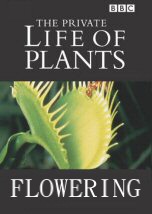
Flowering

   1995    Nature
The third episode is devoted to the ways in which plants reproduce. Pollen and a stigma are the two components needed for fertilisation. Most plants carry both these within their flowers and rely on animals to transport the pollen from one to the stigma of another. To do this, they attract their couriers with colour, scent and nectar. It isn't just birds that help pollination: some mammals and reptiles also do so. However, it is mostly insects that are recruited to carry out the task. To ensure that pollen is not wasted by being delivered to the wrong flower, some species of plant have developed exclusive relationships with their visitors, and the gentian and its attendant carpenter bees is one example. Since pollen can be expensive to produce in terms of calories, some plants, such as orchids, ration it by means of pollinia and a strategically placed landing platform. Other orchids offer no reward for pollination, but instead mislead their guests by mimicking their markings and aroma, thus enticing males to 'mate' with them (Pseudocopulation). The most extreme fertilisation method is one of imprisonment, and one plant that uses it is the dead horse arum. It is often found near gull colonies, and mimics the appearance and smell of rotting flesh. Blow-flies are attracted to it, and are forced to stay the night before being allowed to depart in the morning, laden with pollen. Finally, Attenborough introduces the world's largest inflorescence: that of the titan arum.
Series: The Private Life of Plants

Last Stand

   2015    History
The Roman army turns its attention to an island of rich resources, powerful tribes and druids, and advanced military equipment - Britain. This episode tells the story of the Celts' last stand against the Roman army - a revolt led by another great leader, the warrior queen Boudicca.
Series: The Celts: Blood, Iron, and Sacrifice
How Earth Made Us

How Earth Made Us

2010  Science
Arnold

Arnold

2023  History
The Planets

The Planets

2000  Science
Dirty Money

Dirty Money

2018  Culture
Vegan

Vegan

2020  Culture
Dark Net

Dark Net

2016  Technology
Secrets of the Dead

Secrets of the Dead

2017  History