

Last Watched

"Life"  Sort by

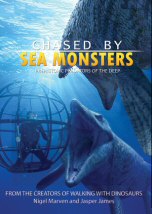
Chased by Sea Monsters 1of3

   2003    Science
If you're a paleontology buff, this series is for you. And the fun-loving Nigel Marvin provides a great narrative. Explore the prehistoric world in search of sea-based monsters. It focuses on life in ancient oceans during each prehistoric period. Nothing, not the carnivorous dinosaurs of the past, nor the imagined sea serpents and monsters of maritime history, nor the great white shark, salt water crocodile, killer whale and leopard seal of today can compare to the horrifying hunters of the prehistoric oceans.
Series: Chased by Sea Monsters
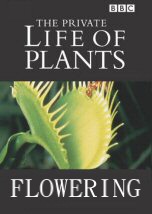
Flowering

   1995    Nature
The third episode is devoted to the ways in which plants reproduce. Pollen and a stigma are the two components needed for fertilisation. Most plants carry both these within their flowers and rely on animals to transport the pollen from one to the stigma of another. To do this, they attract their couriers with colour, scent and nectar. It isn't just birds that help pollination: some mammals and reptiles also do so. However, it is mostly insects that are recruited to carry out the task. To ensure that pollen is not wasted by being delivered to the wrong flower, some species of plant have developed exclusive relationships with their visitors, and the gentian and its attendant carpenter bees is one example. Since pollen can be expensive to produce in terms of calories, some plants, such as orchids, ration it by means of pollinia and a strategically placed landing platform. Other orchids offer no reward for pollination, but instead mislead their guests by mimicking their markings and aroma, thus enticing males to 'mate' with them (Pseudocopulation). The most extreme fertilisation method is one of imprisonment, and one plant that uses it is the dead horse arum. It is often found near gull colonies, and mimics the appearance and smell of rotting flesh. Blow-flies are attracted to it, and are forced to stay the night before being allowed to depart in the morning, laden with pollen. Finally, Attenborough introduces the world's largest inflorescence: that of the titan arum.
Series: The Private Life of Plants

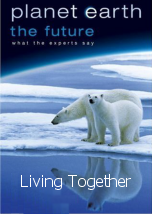
Living Together

   2006    Nature
The documentary deals with the future of conservation. It begins by looking at previous efforts. The 'Save The Whales' campaign, which started in the 1960s, is seen to have had a limited effect, as whaling continues and fish stocks also decline. In the 1990s, as head of the Kenya Wildlife Service, Richard Leakey took on the poachers by employing armed units. Although it was successful in saving elephants, the policy was detrimental to the Maasai people, who were forced from their land. The need for "fortress" areas is questioned, and the recently highlighted Raja Ampat coral reef in Indonesia is an example. The more tourism it generates, the greater the potential for damage — and inevitable coastal construction. Sustainable development is viewed as controversial, and one contributor perceives it to currently be a "contradiction in terms". Trophy hunting is also contentious. Those that support it argue that it generates wealth for local economies, while its opponents point to the reducing numbers of species such as the markhor. Ecotourism is shown to be beneficial, as it is in the interests of its providers to protect their environments. However, in some areas, such as the Borneo rainforests, the great diversity of species is being replaced by monocultures. The role of both religion and the media in conservation is argued to be extremely important. Contributors to the programme admit a degree of worry about the future, but also optimism.

The Oceans

   2007    Nature
Earth’s oceans help make our planet different from every other planet in the solar system. As far as we know, no other place is the right temp for liquid water, the most essential ingredient for life to exist. The oceans are Earth’s primary stabilizing force, and their immense power helps to shape the appearance and behavior of the entire planet and everything living on it. And they are also the planet's great unknown - their deepest points have been visited less than the surface of the moon.
Series: Earth, The Power of the Planet

Let there be Life

   2014    Science
Professor of physics Jim Al-Khalili investigates the most accurate and yet perplexing scientific theory ever - quantum physics, the perplexing theory of sub-atomic particles. Turning his attention to the world of nature, can quantum mechanics explain the greatest mysteries in biology? The European robin navigates using one of the most bizarre effects in physics - quantum entanglement, a process which seems to defy common sense. Jim finds that even the most personal of human experiences - our sense of smell - is touched by ethereal quantum vibrations. According to new experiments it seems that our quantum noses are listening to smells. Jim discovers that the most famous law of quantum physics - the uncertainty principle - is obeyed by plants and trees as they capture sunlight during the vital process of photosynthesis. Jim wonders if the strange laws of the sub-atomic world, which allow objects to tunnel through impassable barriers in defiance of common sense, could effect the mechanism by which living species evolve?
Series: The Secrets of Quantum Physics

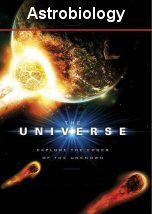
Astrobiology

   2008    Science
Does life exist on other planets? Astrobiology is a visionary new science that searches for life in space by combining the disciplines of astronomy, biology and geology. How did life evolve on Earth? What will life look like on other planets? These and other pertinent questions will be answered by a diverse group of scientists. Viewers will visit the Pilbara region of West Australia where the oldest evidence of life on Earth has been discovered. Travel to the moons of Jupiter and Saturn to test a theory that life could exist in the clouds of Venus. Finally, watch as experiments are done to see if life exists on exoplanets, earth-like planets beyond our solar system.
Series: The Universe
Dark Net

Dark Net

2016  Technology
Secrets of the Dead

Secrets of the Dead

2017  History
Zeitgeist

Zeitgeist

2007  Culture
Neanderthal

Neanderthal

  History
Universe

Universe

2021  Science
High Score

High Score

2020  Technology
The Crime of the Century

The Crime of the Century

2021  Medicine
Top Gear

Top Gear

2012  Technology