Athens, Alexandria, Tikal and Rome: these legendary cities are some of the world's most famous archaeological sites. And yet, they still have not revealed all their secrets. The ambition of this series is to resuscitate the first megalopolises of universal history. In the first episode, the extraordinary city of Athens, the richest and most powerful in all of ancient Greece. The film leads us in the footprints of a nation of extraordinary builders, thinkers, and inventors of incredible machines.
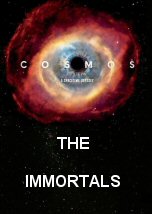
Professor Brian Cox continues his epic exploration of the cosmos by looking at the faint band of light that sweeps across the night sky - our own galaxy, the Milky Way. The Sun is just one of almost 400 billion stars that form this vast, majestic disk of light, our own home in the universe. Thanks to a cutting-edge space we’re finally able to reveal the Milky Way’s dramatic history and predict its cataclysmic future. Our galaxy started out a fraction of the size it is today, and Gaia telescope has revealed how it grew over the eons. Beautifully rendered VFX based on the very latest Gaia data has uncovered the remarkable story of our galaxy’s evolution. As our young galaxy encountered rival galaxies, it experienced a series of violent growth spurts and intense periods of cataclysmic change while battling to survive. Each time our galaxy feeds, a new era of star formation begins, fuelled by incoming torrents of fresh gas and energy. And there is another collision to come. Another, larger galaxy is coming our way. Andromeda is heading straight for us at a quarter of a million miles per hour. The Milky Way’s long-term fate is in the balance.
Our universe is at war. The universe is a very violent and deadly place. Entire galaxies fight to the death. Only the strongest survive. If a galaxy wants to stay alive, it has to feed on other galaxies. Our own galaxy also fights for survival. These battles are how galaxies live, grow, and die. These collisions got us to where we are today, and they're going to determine the future of the universe.
We're unlocking the secrets of our planet's voyage and discovering that earth's journey affects us all. The Earth is extremely dynamic. It is spinning on its axis, it's whirling about the sun and it's corkscrewing throughout the this galaxy. And there is the fact than Andromeda and the Milky Way are currently 2.5 million light-years apart, but they're hurtling towards each other at over 250,000 miles an hour. A collision is inevitable. As stars, dust, and gas swirl around each other, gravitational interactions could slingshot our solar system out into intergalactic space.
Cities are growing at a faster rate than any other habitat on Earth. They may seem an unlikely place for animals to thrive, but they can be a world of surprising opportunity. Leopards prowl the streets of Mumbai, peregrine falcons hunt amongst New York's skyscrapers, and a million starlings perform spectacular aerial dances over Rome. In Jodhpur, langurs are revered as religious deities and in Harar, locals live in harmony with wild hyenas. Many animals, however, struggle to cope in the urban jungle. As the architects of this environment, can humans choose to build cities that are homes for both them and wildlife?
On the second part of his journey through the dark ages Richard Rudgley continues into the age of the wandering peoples, the Volkerwanderung. These Northern people enjoyed a golden age unaffected by Rome and just 30 years after the Romans relinquished Britain, the 'Anglo-Saxons' made their move. The bedraggled legions are in retreat. Walls are pulled down. Mosaics shattered. And yet there never was a people called Anglo-Saxon. We look at the lasting influence of Saxon leaders like Alfred the Great, and his blue print for social justice.











In the first episode, the extraordinary city of Athens, the richest and most powerful in all of ancient Greece. The film leads us in the footprints of a nation of extraordinary builders, thinkers, and inventors of incredible machines.