Meet Perseverance, NASA's latest rover, as it heads to Mars to answer one question: did life exist on the red planet? On the way, it will lay the foundation for human exploration of our closest neighbour. Today, Mars is hostile to life. It's too cold for water to stay liquid on the surface, and the thin atmosphere lets through high levels of radiation, potentially sterilizing the upper part of the soil. But it wasn't always like this. Some 3.5 billion years ago or more, water was flowing on the surface. It carved channels still visible today and pooled in impact craters. A thicker carbon dioxide atmosphere would have blocked more of the harmful radiation. The Mars 2020/Perseverance rover is designed to better understand the geology of Mars and seek signs of ancient life. The mission will collect and store a set of rock and soil samples that could be returned to Earth in the future. It will also test new technology to benefit future robotic and human exploration of Mars, as the Ingenuity Helicopter.
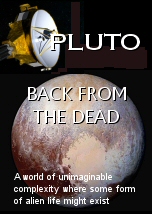
The incredible story of how Pluto has been propelled from an unremarkable ball of ice on the edge of the solar system to a world of unimaginable complexity - where some form of alien life might exist. New discoveries from the edge of the solar system are transforming what is known about Pluto, thanks to the New Horizons space probe that took the first-ever close up images of the planet. Pluto was once thought to be geologically dead, but the pictures revealed it to be an active world of stunning complexity, with mountains carved from ice, a nitrogen glacier that appeared to be moving and a recently active volcano, with data sent back lead some scientists to speculate that there may even be life on Pluto today.
Our universe reveals itself in ways we’ve never seen before, thanks to new discoveries in astrobiology. Today, the advent of cutting-edge observational instruments is shedding light on amazing facts about life and the universe. NASA's next-generation space telescope TESS (Exoplanet Survey Satellite) has begun its search for Earth-like planets belonging to other star systems. How many of these 'exoplanets' can host life, and what kind of life forms can evolve in these environments?
Every day Astronomers are finding a new planetary system that looks pretty similar to Earth. The possibilities of life somewhere else other than Earth I think are very high. If there is life out there what would it be like? Could we talk to it? Is there anything out there like you and me? To find out, we can't just look into space, we also need to look down here. The story of how a miraculous event transformed life on Earth into a complex interconnected food web; Astronauts and experts question other intelligent life in the universe.
Over billions of years, planet Earth has become home to an amazing interdependent ecosystem, containing a dizzying variety of animals and plants. But how did life here begin? And does it exist anywhere outside of our solar system? We uncover the secrets of our world by tracking the evolution of the cosmos itself, from the Big Bang onwards. Follow scientists responsible for some of the major breakthroughs in understanding the origins of life and witness how their discoveries are fundamentally changing the way we perceive the universe.
We are living in a new golden age of exploration. Planet hunters are searching far beyond our solar system and they are actually finding new worlds orbiting other suns. Thousands of these alien worlds have already been found, but this is the story of perhaps the greatest discovery yet, a star 40 light-years away with seven Earth-sized planets: Trappist-1. This new discovery of seven alien Earth-like planets in a faraway solar system is a major milestone in our hunt for extraterrestrial life, and experts investigate the secrets of Trappist -1's mysterious worlds to reveal if we're truly alone in the universe.





























Today, Mars is hostile to life. It's too cold for water to stay liquid on the surface, and the thin atmosphere lets through high levels of radiation, potentially sterilizing the upper part of the soil. But it wasn't always like this. Some 3.5 billion years ago or more, water was flowing on the surface. It carved channels still visible today and pooled in impact craters. A thicker carbon dioxide atmosphere would have blocked more of the harmful radiation. The Mars 2020/Perseverance rover is designed to better understand the geology of Mars and seek signs of ancient life. The mission will collect and store a set of rock and soil samples that could be returned to Earth in the future. It will also test new technology to benefit future robotic and human exploration of Mars, as the Ingenuity Helicopter.