



Last Watched

"Seal"  Sort by

Coastal Seas

   2019    Nature    HD
Immense shoals of fish throng our shallow seas. Small fish, in turn, sustain bigger ones. The rich coastal seas are the fishing grounds of our planet and can provide an abundance of food for wildlife and humanity. The seas fringing land make up less than a tenth of the world's oceans but 90 percent of marine creatures live in coastal waters, from fearsome sharks to lowly urchins. Protecting these habitats is a battle humanity must win.
Series: Our Planet
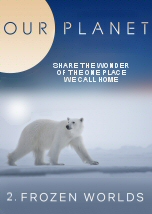
Frozen Worlds

   2019    Nature    HD
The polar regions of our planet may seem beyond the reach of most of us, but they are not beyond our influence. We, unintentionally, are changing these frozen worlds, and these changes will not just affect the poles but the whole planet. On the unforgiving frontier of climate change, polar bears, walruses, seals and penguins find their icy Edens in peril.
Series: Our Planet

A New Perspective

   2019    Nature    HD
Prepare yourself for a groundbreaking series that reveals a spectacular new space-based vision of our planet. Cameras in space will tell stories of life on our planet from a brand new perspective.
Satellites follow an elephant family struggling through drought, reveal previously unknown emperor penguin colonies from the colour of their poo, and discover mysterious ice rings that could put seal pups in danger. Using cameras on the ground, in the air and in space, Earth from Space follows nature’s greatest spectacles, weather events and dramatic seasonal changes. This is our home, as we’ve never seen it before.
Series: Earth from Space

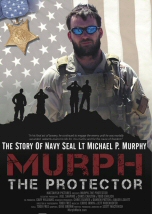
Murph: The Protector

   2013    History
A feature-length documentary based on LT Michael Murphy's life of honor, courage and commitment, as told by his friends, family and teammates. Michael was raised in Patchogue, New York, attended Penn State University and then joined the U.S. Navy to serve in the SEAL Teams. Well-known for his selflessness, Michael gave his life for his men in 2005 and was posthumously awarded the Congressional Medal of Honor in 2007. His legacy now lives on in this moving portrait of a real American hero.

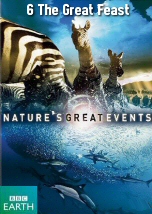
The Great Feast

   2009    Nature
Every summer in the seas off Alaska humpback whales, sea lions and killer whales depend on an explosion of plant life, the plankton bloom. It transforms these seas into the richest on Earth. But will these animals survive to enjoy the great feast? The summer sun sparks the growth of phytoplankton, microscopic floating plants which can bloom in such vast numbers that they eclipse even the Amazon rainforest in sheer abundance of plant life. Remarkably, it is these minute plants that are the basis of all life here. But both whales and sea lions have obstacles to overcome before they can enjoy the feast. Humpback whales migrate 3,000 miles from Hawaii, and during their 3 month voyage lose a third of their body weight. In a heart-rending scene a mother sea lion loses her pup in a violent summer storm, while another dramatic sequence shows a group of killer whales working together to kill a huge male sea lion.
In late summer the plankton bloom is at its height. Vast shoals of herring gather to feed on it, diving birds round the fish up into a bait ball and then a humpback whale roars in to scoop up the entire ball of herring in one huge mouthful. When a dozen whales work together they employ the ultimate method of co-operative fishing - bubble net feeding. One whale blows a ring of bubbles to engulf the fish and then they charge in as one. Filmed from the surface, underwater and, for the first time, from the air, we reveal how these giant hunters can catch a tonne of fish every day.
Series: Nature Great Events

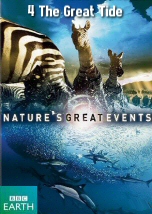
The Great Tide

   2009    Nature
A mighty army of dolphins, sharks, whales, seals and gannets hunt down the billions of sardines along South Africa's east coast each winter. This is the Sardine Run: an underwater Armageddon, the greatest gathering of predators anywhere on the planet, and the most spectacular event in the world's oceans. From intimate moments of the creatures caught up in the run, to the dramatic finale of this spectacular event, The Great Tide is an action-packed feeding-frenzy, filmed underwater, on the ocean's surface, and in the air.
However, in recent years the sardine run has become less predictable, perhaps due to the warming effects of climate change. If the sardine run does not happen, the lives of the animals caught up in the drama hang in the balance. Pioneering a unique boat stabilised camera mount for surface filming, Nature's Great Events crew capture all the high octane action as the predators compete for sardines, filmed with aerial, underwater and above water cameras. Super slow motion cameras also capture the very moment gannets plunge into the water, hitting it at sixty miles an hour.
A violent winter storm is the trigger for the sardines to begin their desperate dash. They are followed by a super-pod of 5,000 dolphins and further up the coast more predators gather. A shoal of sardines 15 miles long is pushed into the shallows and aerial shots show thousands of sharks gathering to feed on them. The climax to the sardine run is a spectacular feeding frenzy as the dolphins round the sardines up into balls on which all the predators feast. Gannets rain down in their thousands, sharks pile in scattering the fish and a Bryde's whale lunges in taking great mouthfuls of sardines.
Series: Nature Great Events
Arnold

Arnold

2023  History
The Planets

The Planets

2000  Science
Dirty Money

Dirty Money

2018  Culture
Vegan

Vegan

2020  Culture
Dark Net

Dark Net

2016  Technology
Secrets of the Dead

Secrets of the Dead

2017  History
Zeitgeist

Zeitgeist

2007  Culture