







Last Watched

" The Universe"  Sort by

Is Gravity An illusion

   2014    Science
We feel it every moment of our lives but for physicists, gravity is the longest running unsolved mystery of the universe. Why do all objects that have mass pull on one another? Cutting-edge theories are proposing unexpected answers: Gravity could be another force in disguise, a thermodynamic mirage, or even, a shadow of a hidden holographic universe. If so, the force that holds us to the surface of the earth, and holds the earth in orbit around the sun, may be a trick of the mind. We feel it, but it may not be real. Is Gravity an Illusion?
Series: Through the Wormhole Season 5
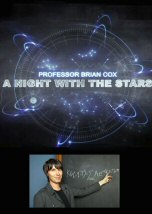
A Night With The Stars

   2011    Science
For one night only, Professor Brian Cox goes unplugged in a specially recorded programme from the lecture theatre of the Royal Institution of Great Britain. In his own inimitable style, Brian takes an audience of famous faces, scientists and members of the public on a journey through some of the most challenging concepts in physics. With the help of Jonathan Ross, Simon Pegg, Sarah Millican and James May, Brian shows how diamonds - the hardest material in nature - are made up of nothingness; how things can be in an infinite number of places at once; why everything we see or touch in the universe exists; and how a diamond in the heart of London is in communication with the largest diamond in the cosmos.

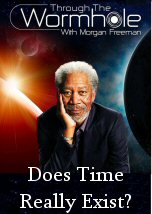
Does Time Really Exist

   2011    Science
Time is woven into the fabric of the universe as one of the dimensions in which we live our daily lives. But maybe it is only a brain state that we use to piece together events. Could it exist only in our minds? Your sense of time can be totally different than the person next to you. This and other theories illustrate that time is an illusion and does not really exist. The world's top physicists tackle this fundamental question, does time exist, and offer new ways to perceive the physical world.
Series: Through the Wormhole

What Have UFOs Done for Us

   2015    Culture
From unexplained flashes in the night sky to flying saucers, this episode delves into the mysterious world of UFOs. How our drive to explain these bizarre phenomena, and desire to discover little green men, has in fact transformed our understanding of the universe
Series: The Sky at Night

Hiding in the Light

   2014    Science
This episode explores the wave theory of light as studied by mankind, noting that light has played an important role in scientific progress, with such early experiments from over 2000 years ago involving the camera obscura by the Chinese philosopher Mozi. Tyson describes the work of the 11th century Arabic scientist Ibn al-Haytham, considered to be one of the first to postulate on the nature of light and optics leading to the concept of the telescope, as well as one of the first researchers to use the scientific method. Tyson proceeds to discuss the nature of light as discovered by mankind. Work by Isaac Newton using diffraction through prisms demonstrated that light was composed of the visible spectrum, while findings of William Herschel in the 19th century showed that light also consisted of infrared rays. Joseph von Fraunhofer would later come to discover that by magnifying the spectrum of visible light, gaps in the spectrum would be observed. These Fraunhofer lines would later be determined to be caused by the absorption of light by electrons in moving between atomic orbitals when it passed through atoms, with each atom having a characteristic signature due to the quantum nature of these orbitals. This since has led to the core of astronomical spectroscopy, allowing astronomers to make observations about the composition of stars, planets, and other stellar features through the spectral lines, as well as observing the motion and expansion of the universe, and the existence of dark matter.
Series: Cosmos: A Spacetime Odyssey

Wildest Weather in the Cosmos

   2008    Science
Imagine a tornado so powerful, it can form a planet, or winds sweeping across a planet but blowing at 6,000 miles per hour! How about rain....made of iron? Sounds like science fiction, but this type of weather is occurring daily in our solar system. Scientists are just beginning to unlock the secrets of these planets and their atmospheres. Can this research help scientists solve long unanswered questions that we have about Earth? As our own planet churns with the effects of global warming, it's natural to look into the heavens and wonder about the rest of the real estate.
Series: The Universe
Dark Net

Dark Net

2016  Technology
Secrets of the Dead

Secrets of the Dead

2017  History
Zeitgeist

Zeitgeist

2007  Culture
Neanderthal

Neanderthal

  History
Universe

Universe

2021  Science
High Score

High Score

2020  Technology
The Crime of the Century

The Crime of the Century

2021  Medicine
Top Gear

Top Gear

2012  Technology