Coral reefs are the nursery for all life in the oceans, a remarkable ecosystem that sustains us. Yet with carbon emissions warming the seas, a phenomenon called 'coral bleaching' -a sign of mass coral death- has been accelerating around the world, and the public has no idea of the scale or implication of the catastrophe silently raging underwater. Chasing Coral taps into the collective will and wisdom of an ad man, a self-proclaimed coral nerd, top-notch camera designers, and renowned marine biologists as they invent the first time-lapse camera to record bleaching events as they happen. Unfortunately, the effort is anything but simple, and the team doggedly battles technical malfunctions and the force of nature in pursuit of their golden fleece: documenting the indisputable and tragic transformation below the waves. With its breathtaking photography, nail-biting suspense, and startling emotion, Chasing Coral is a dramatic revelation that won't have audiences sitting idle for long.
'It's really about terror and intimidation and people basically fighting for survival and often committing extraordinary violence in order to protect themselves or to stay safe. It's kind of like the weak dog in the pack. If others spot weakness, they're gonna pounce on you for a couple of reasons. You pounce on that guy, that gives you a little more status. So, I had to ask myself, are you gonna be a victim? No, I ain't gonna be a victim. Well, that really only left me one choice in my mind. That means I gotta be the victimizer. At some point, for some reason, might be legitimate, might not be, someone's gonna test you.. Even if you lose, you're gonna have to stand up for yourself. ' 'A guy comes over, and it's your day to get your package, and he tries to take your package from you that your people sent you, if you let him do it, there's gonna be 10 other dudes, oh, yeah, he let that guy take his package, I'm gonna go get his TV, right down the line until somebody's after your ass. But if you stand up that first time and they see you'll stand up for yourself, even if you lose, people will respect that. Oh, don't mess with him. There's easier prey. Why do you have to go and get that guy and get a couple lumps for it when he can go get that guy's stuff over there, don't cost you nothing. It usually only has to happen once or twice but just as importantly that you didn't go to the man for help... you're gonna be all right.'
The film, directed by James Swirsky and Lisanne Pajot, looks at the underdogs of the video game industry, indie game developers, who sacrifice money, health and sanity to realize their lifelong dreams of sharing their creative visions with the world. This Sundance award-winning film captures the tension and drama by focusing on these artists' vulnerability and obsessive quest to express themselves through a 21st-century art form.
Professor Jim Al-Khalili looks at how we have created machines that can simulate, augment, and even outperform the human mind - and why we shouldn't let this spook us. He reveals the story of the pursuit of AI, the emergence of machine learning and the recent breakthroughs brought about by artificial neural networks. He shows how AI is not only changing our world but also challenging our very ideas of intelligence and consciousness.
Along the way, we'll investigate spam filters, meet a cutting-edge chatbot, look at why a few altered pixels makes a computer think it's looking at a trombone rather than a dog and talk to Demis Hassabis, who heads DeepMind and whose stated mission is to 'solve intelligence, and then use that to solve everything else'. Stephen Hawking remarked 'AI could be the biggest event in the history of our civilisation. Or the worst'. Jim argues that AI is a potent new tool that should enhance our lives, not replace us.
To our medieval forebears the world could appear mysterious, even enchanted. Sightings of green men, dog heads and alien beings were commonplace. The world itself was a book written by God. But as the Middle Ages grew to a close, it became a place to be mastered, even exploited.
The Sundarbans mangrove forest, in Bangladesh near the Indian border, is a tidal jungle where Ganges and Brahmaputra enter the Indian Ocean. Its has some 400 Bengal tigers - the largest population in the world, and the only to be hardly scared of men. The downside is tigers kill up the 50 Bangladeshis a year, even from neighbouring villages, so keeping them inside the reserve is key to long-term survival. A recent project tries to train local mongrels, not pets but fiercely self-reliant dogs, to spot and even scare off tigers from villages. An individual tiger can turn into a man-eater in order to survive - this process may occur due to an injury or old age (and so cannot hunt agile prey) or even accidentally tasting human flesh.
















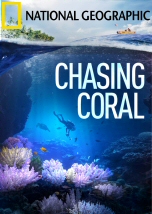













Chasing Coral taps into the collective will and wisdom of an ad man, a self-proclaimed coral nerd, top-notch camera designers, and renowned marine biologists as they invent the first time-lapse camera to record bleaching events as they happen. Unfortunately, the effort is anything but simple, and the team doggedly battles technical malfunctions and the force of nature in pursuit of their golden fleece: documenting the indisputable and tragic transformation below the waves. With its breathtaking photography, nail-biting suspense, and startling emotion, Chasing Coral is a dramatic revelation that won't have audiences sitting idle for long.