


Last Watched

"Mars"  Sort by

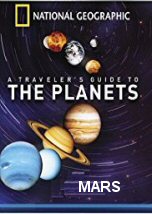
Mars

   2010    Science
Mars is filled with mysteries, Volcanoes 77 000 feet tall, Huge canyons, 3000 miles across and 6 miles deep, all kinds of interesting features. Awaiting you is some of the greatest scenery in our Solar System, on a world where water once ruled, then vanished into thin air. Where lost microbe empires may still survive underground. We've seen the postcards, and we do wish we were there.
Series: A Traveler Guide to the Planets

Journey to Space

   2015    Technology    3D    HD
NASA’s next era will be its greatest yet. That is the clear 'roadmap' painted by Journey To Space. The film absolutely annihilates the perception that the space program died with the end of the Space Shuttle Program by showcasing the exciting plans NASA and the space community are working on, and the challenges they must overcome to carry out audacious missions such as landing astronauts on Mars and capturing asteroids. In the past half century, humans have punched through the stratosphere, walked on the moon, and lived continuously in orbit. In the coming decades, our unquenchable curiosity will take our species beyond the cradle of Earth to touch the face of another world. Strap in for the next giant leap. Next stop ... Mars!

Catastrophes that Changed the Planets

   2011    Science
The planets of our solar system have experienced epic catastrophes throughout their long history, both raining down from outside and bubbling up from within. We'll voyage back in time to investigate the violent events that profoundly shaped the planets, including earth itself. We'll witness stunning revelations about what transformed Mars into a barren, hostile desert... The disaster that changed Venus from temperate to hellish... The impact that blew away Mercury's mantle, turning it into a planetary core... A colossal disturbance that rearranged the orbits of the gas giants... Titanic impacts on Jupiter... And how a lost moon may finally explain Saturn's rings.
Series: The Universe

Should We go to Mars

   2017    Technology
The attempt to send and land astronauts on Mars risks billions of dollars and the lives of those brave enough to attempt it. Is the possible benefit really worth the risk? And is it really achievable? Guiding us through this ethical and scientific minefield is Dr Kevin Fong. Kevin's diverse background in astrophysics, aeronautics and medicine makes him uniquely placed to understand the technical and human challenges of this perilous journey. He leads us through the journey to Mars stage by stage. For Kevin, not only is this the toughest journey we will ever attempt, it is one that he feels we ultimately must make if we are to survive as a species.
Series: The Big Think

Mars, the Red Planet

   2007    Science
Visit the planet most like Earth. There is a discussion of what life on Mars would be like and about the life forms that could've evolved there
Series: The Universe

The Immortals

   2014    Science
This episode covers the nature of how life may have developed on Earth and the possibility of life on other planets. Tyson begins by explaining how the human development of writing systems enabled the transfer of information through generations, describing how Princess Enheduanna ca. 2280 BCE would be one of the first to sign her name to her works, and how Gilgamesh collected stories, including that of Utnapishtim documenting a great flood comparable to the story of Noah's Ark. Tyson explains how DNA similarly records information to propagate life, and postulates theories of how DNA originated on Earth, including evolution from a shallow tide pool, or from the ejecta of meteor collisions from other planets. In the latter case, Tyson explains how comparing the composition of the Nakhla meteorite in 1911 to results collected by the Viking program demonstrated that material from Mars could transit to Earth, and the ability of some microbes to survive the harsh conditions of space. With the motions of solar systems through the galaxy over billions of years, life could conceivably propagate from planet to planet in the same manner. Tyson then moves on to consider if life on other planets could exist. He explains how Project Diana performed in the 1960s showed that radio waves are able to travel in space, and that all of humanity's broadcast signals continue to radiate into space from our planet. Tyson notes that projects have since looked for similar signals potentially emanating from other solar systems. Tyson then explains that the development and lifespan of extraterrestrial civilizations must be considered for such detection to be realized. He notes that civilizations can be wiped out by cosmic events like supernovae, natural disasters such as the Toba disaster, or even self-destruct through war or other means, making probability estimates difficult. Tyson describes how elliptical galaxies, in which some of the oldest red dwarf stars exist, would offer the best chance of finding established civilizations. Tyson concludes that human intelligence properly applied should allow our species to avoid such disasters and enable us to migrate beyond the Earth before the Sun's eventual transformation into a red giant.
Series: Cosmos: A Spacetime Odyssey