



Last Watched

"Disco"  Sort by

Atlas Maps

   2010    History
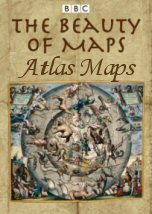
The Dutch Golden Age saw map-making reach a fever pitch of creative and commercial ambition. This was the era of the first ever Atlases - elaborate, lavish and beautiful. This was the great age of discovery and marked an unprecedented opportunity for mapmakers who sought to record and categorise the newly acquired knowledge of the world. Rising above the many mapmakers in this period was Gerard Mercator, inventor of the Mercator projection, who changed mapmaking forever when he published his collection of world maps in 1598 and coined the term 'Atlas'. The programme looks at some of the largest and most elaborate maps ever produced, from the vast maps on the floor of the Royal Palace in Amsterdam, to the 24 volume atlas covering just the Netherlands, to the largest Atlas in the world, The Klencke Atlas. It was made for Charles II to mark his restoration in 1660. But whilst being one of the British Libraries most important items, it is also one of its most fragile so hardly ever opened. This is a unique opportunity to see inside this enormous and lavish work, and see the world through the eyes of a King.
Series: The Beauty of Maps
Dinosaurs Giants of Patagonia

   2007    Science    3D    HD
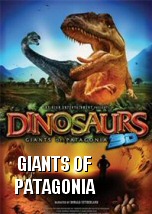
'Dinosaurs: Giants of Patagonia' Following Pr Rodolfo Coria, a world-reknown Argentinian paleontologist, we visit sites of major discoveries he has contributed to in Patagonia and travel back in time to see these amazing beasts come to life in 3D. Patagonia has given us the largest living animal to ever walk the Earth: the titanesque plant-eating Argentinosaur, and its nemesis, the Giganotosaur, a bipedal carnivore that could easily challenge the famous T-Rex.

Big Bang Machine

   2015    Technology
On July 4, 2012, scientists at the giant atom smashing facility at CERN announced the discovery of a subatomic particle that seems like a tantalizingly close match to the elusive Higgs Boson, thought to be responsible for giving all the stuff in the universe its mass. Since it was first proposed nearly fifty years ago, the Higgs has been the holy grail of particle physicists: finding it completes the 'standard model" that underlies all of modern particle physics. Now CERN's scientists are preparing for the Large Hadron Collider's second act, when they restart the history-making collider, running at higher energy--hoping to find the next great discovery that will change what we know about the particles and forces that make up our universe.

Asteroid Attack

   2010    Science
What are the latest discoveries in the deadly world of asteroids? Will a recently returned Japanese spacecraft become the first to bring an asteroid sample back to our planet? What would happen to America's East Coast if the massive asteroid impact that helped form Chesapeake Bay 35 million years ago struck today? And why did President Barack Obama choose an asteroid as the destination for the next great manned mission into space? Learning about these huge space rocks isn't just about science, it's about survival.
Series: The Universe

Are...We Alone

   2014    Science
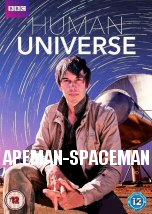
Is mankind alone, or are there aliens out there, either waiting to be discovered, or on their way to find Earth? Professor Brian Cox spends this episode asking such questions, and what he discovers may raise a few eyebrows. He begins by exploring the human race's efforts to find neighbours in outer space, including the launch of two golden discs containing a greeting from Earth in the 1970s; they are still travelling and are now the most distant man-made objects from the planet. Brian also meets members of the Search for Extra-Terrestrial Intelligence, who have been monitoring radio signals for 50 years without success, before discussing the ingredients needed to make an intelligent civilisation with astrophysicist Dr Frank Drake.
Series: Human Universe

Conquistadors: The Search for El Dorado

   2002    History
Francisco de Orellana failed to find El Dorado, but discovered the Amazon. Early in 1541, a rumor swept Quito that beyond the mountains, there lay a land richer than Mexico, or even Peru - a land of gold. The ruler of this land was so rich that he covered himself with gold dust every day and washed it off every evening. He was "the golden man", El Dorado. They had tree goals: to find La Canela, the land of cinnamon: to assess new lands for colonization; and to find El Dorado. On march 1541, They marched eastwards with more that 200 Spanish troops and thousands of native servants.
Series: Conquistadors
Generation Iron

Generation Iron

2018  History
Life

Life

2009  Nature
Frozen Planet II

Frozen Planet II

2022  Nature
Magic Numbers

Magic Numbers

2018  Science
D-Day

D-Day

2013  History
Human Universe

Human Universe

2014  History