In this mind-bending series, Professor Jim Al-Khalili explores the vast range of size in the universe, from tiny atoms to gigantic, interconnected galaxies. In the first episode, Jim will enter the world of objects that are too tiny to glimpse with the naked eye. Starting with the smallest insects, he moves on to encounter living cells with amazing superpowers and confronts some of humanity's deadliest enemies in the form of viruses. Going smaller still, he encounters wondrous new nanomaterials such as graphene, discovered by physicist Andre Geim. These are revolutionising engineering, medicine, computing, electronics and environmental science. Finally, Jim comes face to face with the fundamental building blocks of the world around us – atoms – and reveals why understanding the science of the 'small' is crucial to the future of humanity.
In the second episode, the murder of a political staffer in 2016 spawns a myriad of unfounded conspiracy theories as the man's family and the truth hang in the balance. Following Seth Rich's murder, his parents filed a lawsuit with Fox News after conspiracy theories about his murder spread across the internet. Mary Rich told NPR that the combined trauma of her son's death and the attacks by conspiracy theorists caused intense and lasting distrust. After the case was resolved, Rich's parents said in a statement at the time that they were 'pleased with the resolution of this matter and sincerely hope that the media will take genuine precautions in the future'.
A new era of space is dawning where small satellites no bigger than a shoebox will be deployed not in one or twos, but in their thousands - referred to as satellite swarms. It's been described as the democratization of space. What was once the preserve of governments and superpowers is evolving into a truly global industry. The catalyst for this dramatic change is this new generation of satellites.
The start of a new year brings the January transfer window and Mikel Arteta the chance to rebuild his squad. Arsenal continue their quest for silverware, competing in the FA and Carabao Cup, as well as still fighting for top 4. Meanwhile, questions over Aubameyang's future continue dominating the media and the club must come to a decision about what to do with their former captain.
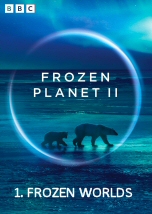
Journeying from pole to pole, The series 'Frozen Planet II' reveals surprising worlds that exist across the planet and the remarkable animals that make them their home. In a fragile world of beauty and hostility, nature finds a way to survive and thrive. David Attenborough explores a planet on the brink of major change. In the first episode, we begin our journey in the far south, in the most hostile place on earth, the frozen continent of Antarctica. After being raised on the ice in winter, emperor penguin chicks find themselves abandoned by their parents in spring. To survive, they must find their own way across the treacherous sea ice to the rich waters of the Southern Ocean. The waters surrounding Antarctica may be the richest of all, but they are also home to an exceptionally sophisticated predator, the killer whale. To reach their favored prey, Weddell seals, a family of killer whales have learnt to generate their own waves, washing the seals off their ice floes. It’s a technique that has been passed down over generations and is coordinated by the family matriarch, who can be over 100 years old. Leaving Antarctica and travelling north, we discover frozen habitats that are created by altitude. The greatest of these is the Himalaya, the tallest mountain range on earth, which contains so much ice and snow it is known as the third pole. In the shadow of the Himalaya lies a vast frozen grassy plain that is home to the fluffiest cat in the world, Pallas’s cat. It may have extremely dense fur, but if it’s to survive the Mongolian winter, it needs to catch lots of gerbils and voles. Easier said than done when you only have short legs and paws that are sensitive to the cold. North of the Great Steppe lies the boreal forest, which encircles the continents of North America, Europe and Asia, and remains frozen for six months of the year. Prowling these forests in the far east of Russia is the Siberian tiger, the largest cat in the world. In winter, it is on the lookout for black bears hibernating in caves, a high-risk strategy that only a cat of this size would attempt. Above the boreal forest, we cross into the Arctic Circle, where conditions become so extreme that trees can no longer grow. This is the tundra. Living here are relics of the last ice age, musk ox. In spring, their calves face a far greater danger than the cold, grizzly bears. Encounters can be brutal, but if just a few calves survive the gauntlet, the herd’s future is secure. To the north of the tundra is the Arctic Ocean, the only ocean that can completely freeze over. Living here is one of the most peculiar animals on earth, the hooded seal. Males have extraordinary inflatable noses, producing a bright red balloon out of their left nostrils. One male hopes this will make him irresistible. All of the frozen habitats share one thing in common: the threat posed by today’s climate change. Travelling to the island of Greenland, home to the largest body of ice in the northern hemisphere, we witness how global warming is melting its ice cap at faster rates than ever before, with profound consequences for global sea levels. Lastly, we visit the Arctic’s most iconic resident, the polar bear, as a mother bear struggles to provide for her cubs in a world of shrinking sea ice.
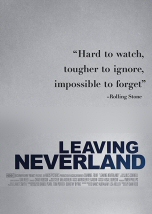
In this revealing documentary, Giancarlo Granda, former pool attendant at the Fontainebleau Hotel, shares the intimate details of his 7-year relationship with a charming older woman, Becki Falwell, and her husband, the Evangelical Trump stalwart Jerry Falwell Jr. Directed by Billy Corben, the film outlines Granda's entanglement with the Falwell's seemingly perfect lives and the overarching influence this affair had on a presidential election. The life of Jerry Falwell — the late Moral Majority televangelist who for decades helped catalyze the rightward shift of American evangelicals before his death in 2007 — is a quintessentially American story. But it’s in the next generation that the Falwell narrative becomes at once soap opera and morality tale. The film covers the graceless fall of Jerry Falwell Jr., who after the death of his father was placed in the presidency of the family’s conservative organ Liberty University. There, he seemed to remain painfully in thrall to his appetites. We hear testimony about his alleged tendency to drink on the job and discomfiting, slurry interviews between him and sympathetic media — but most crucially, we receive the testimony of Giancarlo Granda. Granda was a pool attendant at a Miami hotel when he met Falwell and his wife, Becki, in 2012. Today, he alleges that he was persuaded to have sex with Becki while Falwell watched, and that the pair engaged in an ongoing campaign of communication with him that could be described as coercive. His energies were consumed with managing their tempers and occasionally threatening behavior, and he blames the swirl of scandal around them for derailing his professional future. Plainspoken and only occasionally visibly emotional, Granda is his own best advocate as he describes a couple who, he says, craved his body and were willing to discard the rest of him.








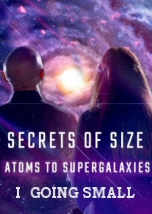









In the first episode, Jim will enter the world of objects that are too tiny to glimpse with the naked eye. Starting with the smallest insects, he moves on to encounter living cells with amazing superpowers and confronts some of humanity's deadliest enemies in the form of viruses. Going smaller still, he encounters wondrous new nanomaterials such as graphene, discovered by physicist Andre Geim. These are revolutionising engineering, medicine, computing, electronics and environmental science. Finally, Jim comes face to face with the fundamental building blocks of the world around us – atoms – and reveals why understanding the science of the 'small' is crucial to the future of humanity.