Documentary about progressive music and the generation of bands that were involved, from the international success stories of Yes, Genesis, ELP, King Crimson and Jethro Tull to the trials and tribulations of lesser-known bands such as Caravan and Egg. The film is structured in three parts, charting the birth, rise and decline of a movement famed for complex musical structures, weird time signatures, technical virtuosity and strange, and quintessentially English, literary influences. It looks at the psychedelic pop scene that gave birth to progressive rock in the late 1960s, the golden age of progressive music in the early 1970s, complete with drum solos and gatefold record sleeves, and the over-ambition, commercialisation and eventual fall from grace of this rarefied musical experiment at the hands of punk in 1977. Contributors include Robert Wyatt, Mike Oldfield, Pete Sinfield, Rick Wakeman, Phil Collins, Arthur Brown, Carl Palmer and Ian Anderson.
This four-part British television series outlines aspects of the history of mathematics. Written and presented by University of Oxford professor Marcus du Sautoy, it is a co-production between the Open University and the BBC. In the first episode, Marcus du Sautoy in Egypt uncovers use of a decimal system based on ten fingers of the hand and discovers that the way we tell the time is based on the Babylonian Base 60 number system. In Greece, he looks at the contributions of some of the giants of mathematics including Plato, Archimedes and Pythagoras, who is credited with beginning the transformation of mathematics from a counting tool into the analytical subject of today. A controversial figure, Pythagoras’ teachings were considered suspect and his followers seen as social outcasts and a little be strange and not in the norm. There is a legend going around that one of his followers, Hippasus, was drowned when he announced his discovery of irrational numbers. As well as his work on the properties of right angled triangles, Pythagoras developed another important theory after observing musical instruments. He discovered that the intervals between harmonious musical notes are always in whole number intervals.
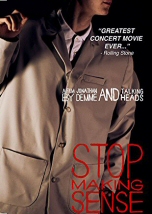
Over the course of three nights at Hollywood's Pantages Theater in December 1983, filmmaker Jonathan Demme joined creative forces with Jordan Cronenweth and Talking Heads... and miracles occurred. Following a staging concept by singer-guitarist David Byrne, this euphoric concert film transcends that all-too-limited genre to become the greatest film of its kind. A guaranteed cure for anyone's blues, it's a celebration of music that never grows old, fueled by the polyrhythmic pop-funk precision that was a Talking Heads trademark, and lit from within by the geeky supernova that is David Byrne. This circus of musical pleasure defies the futility of reductive description; it begs to be experienced, felt in the heart, head, and bones, and held there the way we hold on to cherished memories. On those three nights in December 1983, Talking Heads gave love, life, and joy in generous amounts that years cannot erode, and Demme captured this act of creative goodwill on film with minimalist artistic perfection. Stop Making Sense is an invitation to pleasure that will never wear out its welcome.
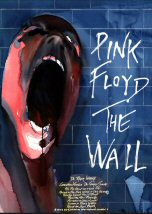
the story of rock singer "Pink" who is sitting in his hotel room in Los Angeles, burnt out from the music business and only able to perform on stage with the help of drugs. Based on the 1979 double album "The Wall" by Pink Floyd, the film begins in Pink's youth where he is crushed by the love of his mother. Several years later, he is punished by the teachers in school because he is starting to write poems. He slowly begins to build a wall around himself to be protected from the world outside. The film shows all this in massive and epic pictures until the very end where he tears down the wall and breaks free. Directed by Alan Parker
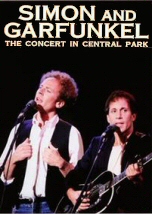
The film is the long-awaited reunion concert of the renowned folk pop music duo, more than a decade after their separation as musical performers. It was recorded on the 19th September 1981 at a free benefit concert on the Great Lawn in Central Park, New York City, where the pair performed in front of an audience reported at the time as 500,000 people. The film includes two songs that had not appeared on the album. Rolling Stone called the concert 'one of the finest performances, one that vividly recaptured another time, an era when well-crafted, melodic pop bore meanings that stretched beyond the musical sphere and into the realms of culture and politics.'
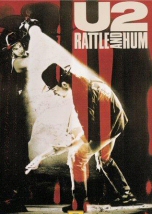
This film documents the 1987 North American tour of the great rock band U2. Fresh with their success of their best selling album 'The Joshua Tree', the band plays monster gigs. Along the way, the band takes the opportunity to indulge in some special musical activities like playing with B.B. King and performing 'I Still Haven't Found What I'm Looking for' with a famous church choir. All the while, concert footage of the band's biggest hits on tour are featured while Bono speaks his mind on the problems of his homeland.




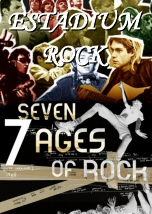
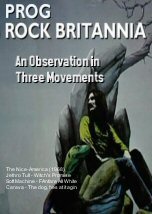






It looks at the psychedelic pop scene that gave birth to progressive rock in the late 1960s, the golden age of progressive music in the early 1970s, complete with drum solos and gatefold record sleeves, and the over-ambition, commercialisation and eventual fall from grace of this rarefied musical experiment at the hands of punk in 1977. Contributors include Robert Wyatt, Mike Oldfield, Pete Sinfield, Rick Wakeman, Phil Collins, Arthur Brown, Carl Palmer and Ian Anderson.