For decades, scientists have sought to unlock the secrets of ancient DNA, a fragile genetic blueprint that rarely survives millions of years. Danish biologist Eske Willerslev had a groundbreaking idea: instead of searching for DNA in fossils or ancient tissues, he looked to frozen sediment. Initially dismissed as impossible, his work led to the recovery of genetic traces from over two million years ago, revealing lush ecosystems that existed before the Ice Age. These discoveries offer unprecedented insights into long-extinct species that thrived in warm, verdant Arctic landscapes.
Willerslev’s perseverance revolutionized DNA research, enabling scientists to reconstruct vanished ecosystems and uncover the genetic secrets of ancient worlds. By examining the DNA of past climates, researchers are paving the way to better understand Earth's deep history and adapt to current environmental challenges. This landmark breakthrough demonstrates that ancient DNA acts as a "time machine," allowing humanity to explore its distant past and draw lessons for the future.
Embark on an extraordinary journey across our cosmic neighborhood to witness the hidden wonders of planets, moons, and asteroids—each world more astonishing than the last. Cutting-edge imaging and breathtaking visuals unveil the solar system in ways never imagined, revealing alien landscapes, colossal storms, and secrets that challenge everything we know about our place in the universe. In the first episode, you can explore volcanic realms where otherworldly landscapes are sculpted by fire and ice. Discover planets and moons blanketed with enormous volcanoes, some erupting so violently that plumes rise into the darkness of space. From oceans of molten rock to frozen geysers launching towering jets of vapor, these spectacular worlds showcase the raw power and beauty of nature beyond Earth.
In the second episode, viewers are taken on a breathtaking journey into the darkest corners of the solar system—places untouched by sunlight and hidden from even our most powerful telescopes. Guided by Professor Brian Cox, the episode uncovers mysterious moons, shadowed craters, and vast underground oceans that may harbor the keys to life beyond Earth. As the veil is lifted on these obscure realms, new frontiers of science and imagination emerge, making this a must-see exploration of what lies in the silence between the stars.
Episode 4 explores the far reaches of our solar system, where ice behaves in extraordinary ways. Frozen moons orbiting giant planets may conceal vast oceans beneath their crusts—possible homes for alien life. From spectacular icy eruptions to entire worlds shaped by cold forces, this journey reveals that ice can be as dynamic and powerful as fire. A stunning look at some of the most mysterious and potentially life-supporting places in space.
In this final journey through our celestial neighborhood, Professor Brian Cox ventures beyond the familiar into the utterly bizarre. He uncovers a dwarf planet shaped like an egg that defies scientific logic, a tiny moon resembling a flying saucer, and a chilling ocean world locked in orbit around Jupiter. These strange and haunting places challenge everything we thought we knew about the solar system—making this the most mind-bending chapter of the series.
Travel back 66 million years to when majestic dinosaurs and extraordinary creatures roamed the lands, seas, and skies in the second season of this acclaimed series narrated by David Attenborough. After a tropical storm, two Zalmoxes find themselves in a rafting event. On a small island, a monumental display takes place as several Hatzegopteryx ambush a herd of Tethyshadros. A female Majungasaurus hunts a group of Simosuchus. A mother Adalatherium raises her offspring in a burrow, hoping to keep them safe from predators like Masiakasaurus and Madtsoia. A pack of Imperobator pursue a Morrosaurus onto a frozen lake. A male Hatzegopteryx attempts to attract a mate.










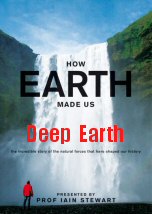















Willerslev’s perseverance revolutionized DNA research, enabling scientists to reconstruct vanished ecosystems and uncover the genetic secrets of ancient worlds. By examining the DNA of past climates, researchers are paving the way to better understand Earth's deep history and adapt to current environmental challenges. This landmark breakthrough demonstrates that ancient DNA acts as a "time machine," allowing humanity to explore its distant past and draw lessons for the future.