From ephemeral home video clips to voice messages never before heard, this film weaves together the intimate, fragile, and incandescent life of a musician who defied convention—and whose flame was extinguished far too soon. We are drawn into a world where every whispered lyric, every undone recording, and every memory shared by those who loved him becomes a portal. We hear his own voice recounting his doubts. We see raw behind-the-scenes moments, fragile family relationships, and the creative tensions that accompany genius. Through interviews with his mother, former lovers, bandmates, and collaborators, the story casts a luminous, unsettling light on the weight of legacy, the burden of expectations, and the search for identity in the shadow of a father whose name he both carried and sought to transcend. This is not just a chronicle of dates and albums—but a pulse, an echo, a lament and a celebration. It asks: when someone leaves too early, how do we piece together what remains? And what does it mean to live forever through music?
An uplifting, boots-on-the-ground chronicle of ten first-time triathletes grinding toward Ironman 70.3 Swansea: dawn swims, wind-chewed bike rides, and long, lonely runs that turn strangers into a squad. Guided by local coaches and an irrepressible community spirit, they juggle work, family, injuries, and self-doubt while learning that endurance is as much about heart as it is about heart-rate. Shot with brisk intimacy and a clear love for its subjects, the film leans into small victories—clipless-pedal triumphs, cold-water courage—and the way a race can remake a life. By race day, the question isn’t who podiums—it’s how far determination, teammates, and a town’s backing can carry ordinary people beyond their limits.
Against the backdrop of Cold War tensions and a global race for supremacy, this riveting film unveils a deeply unsettling chapter in space history. It reveals how the triumph of the 1969 Moon landing was made possible through the morally contentious recruitment of former Nazi scientists—most notably Wernher von Braun—who had engineered Germany’s V‑2 rockets during World War II through Operation Paperclip. As America navigated the ethical maze of enlisting men with dark pasts, these scientists became pivotal in crafting the mighty Saturn V rocket and ushering in the age of space exploration. This documentary invites viewers to confront the unspoken complexity behind progress: the collision of ambition, conscience, and the weight of history.
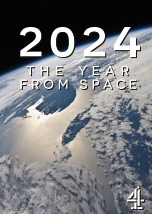
This remarkable film offers a breathtaking, all-seeing perspective on one of the most eventful years in recent history. Captured through stunning satellite imagery, this documentary unveils hidden layers behind major global events, revealing the full scale of their impact as seen from space. From the mesmerizing path of a total solar eclipse to the relentless fury of extreme weather, the intense political landscape of the U.S. elections, and the awe-inspiring spectacle of powerful solar storms, the year 2024 was nothing short of extraordinary. The film also chronicles the devastating wildfires that scarred vast landscapes and the shocking collision of a cargo ship with a bridge in Baltimore—an event so destructive it was clearly visible from orbit. Through cutting-edge satellite technology, “2024: The Year from Space” not only documents history as it unfolded but also offers a rare and humbling reminder of how interconnected our world truly is.
The saga of a handful of conquerors who built an empire in Central America and invented the methods of one of the very first multinationals. In 19th century Central America, a few entrepreneurial cowboys built an empire that enslaved populations and corrupted governments for over 100 years. The United Fruit Company thrived on unregulated capitalism; this film tells its story and that of its pioneers who feared neither God nor Man, and managed to get away with murder. Until the 1970s, that multinational set up a monopoly by combining violence, repression, corruption, environmental destruction and a formidable marketing machine. It turned an unknown fruit into an instrument of fortune and domination, and created a business model still largely used by today’s tech giants. Using a rich trove of archival footage and documents, including letters to and from lobbyists, telegrams, vintage ads and movie clips, and gorgeous, hand-tinted stills, 'When Banana Ruled' is a story of intrigue that touches on economics, international politics, the history of business and reveals how an array of forces conquered the world through a simple fruit.
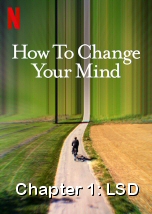
This highly anticipated psychedelic docuseries showcases what these substances teaches people about consciousness, dying, addiction, depression and transcendence. Filmmaker Alex Gibney and best-selling author Michael Pollan present it in four parts, each focused on a different mind-altering substance: LSD, psilocybin, MDMA, and mescaline. With Pollan as our guide, we journey to the frontiers of the new psychedelic renaissance -- and look back at almost-forgotten historical context -- to explore the potential of these substances to heal and change minds as well as culture. The first chapter is a great introduction to the topic of LSD, from its 1943 origins to today's microdosing trend, for those who don’t already know a lot about the subject, and a fun and entertaining refresher on LSD for even experts in the field. The show takes us on a journey through the history of the powerful compound, from its discovery and its early medical use, to secret CIA mind-control studies, the counterculture and its banning, and finally to our current renaissance. It includes amazing clips of LSD’s inventor Albert Hofmann and powerful personal testimonies of individuals who have healed their suffering through LSD.





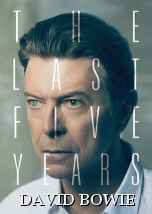
















Through interviews with his mother, former lovers, bandmates, and collaborators, the story casts a luminous, unsettling light on the weight of legacy, the burden of expectations, and the search for identity in the shadow of a father whose name he both carried and sought to transcend. This is not just a chronicle of dates and albums—but a pulse, an echo, a lament and a celebration. It asks: when someone leaves too early, how do we piece together what remains? And what does it mean to live forever through music?