


Last Watched

" Wildlife"  Sort by

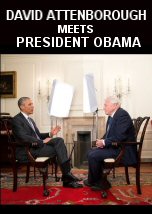
David Attenborough Meets President Obama

   2015    Nature
In a far cry from the steamy jungles of Rwanda or the icy waters of the Arctic, British naturalist Sir David Attenborough has donned a necktie and met with US president Barack Obama to discuss climate change and the future of the planet. The two met at the White House — a place the naturalist had never yet explored — on Sir David's 89th birthday in May to film the interview". It was the first time the respected wildlife filmmaker had met an American president and he seemed a little awed by the experience. Mr Obama, who grew up watching Sir David's programs, seemed equally thrilled. The president has the environment and climate change on his radar and is anxious to see progress made as his presidency comes to a close. He faces stiff opposition from Republicans in Congress on his plans to tackle climate change, but remains determined to make changes before leaving office. "I don't have much patience for anyone who denies that this challenge is real," he said. "We don't have time for a meeting of the Flat Earth Society." Sir David, who has been called "the godfather of natural history TV" by the BBC, brought to the meeting six decades dedicated to sharing the wonders of the natural world with television audiences. After initially being rejected for television because his teeth were deemed "too big", Sir David went on to make his Life on Earth television series, which has been watched by more than 500 million people worldwide. His name is now synonymous with nature, conservation and wildlife. During the television interview, the men discussed global warming, renewable energy and how children and young people hold the key to reversing the damage.

Orbit: Earth Extraordinary Journey July to December

   2012    Nature
Right now, you're hurtling around the Sun at 64,000 miles an hour. In the next year, you'll travel 584 million miles, to end up back where you started. In this spectacular series, presenters Kate Humble and Dr Helen Czerski follow the Earth's voyage around the Sun for one complete orbit, to witness the astonishing consequences this journey has for us all. From seasonal extremes to destructive weather, they travel the world to experience the great events that are shaped by our journey around the Sun." They venture back in time to show how the Earths orbit has changed, and the astounding effect this has had on the planet. For the first time ever, this astonishing series charts the progress of the Earth as it undertakes its incredible annual orbit around the Sun. From stunning space imagery to in-your-face storm chasing, this series showcases the incredible power of our planets epic journey around the Sun. In this first episode they travel from July to the December solstice, experiencing spectacular weather and the largest tides on Earth. To show how the Earth's orbit affects our lives, Helen jumps out of an aeroplane and Kate briefly becomes the fastest driver on Earth.
Series: Orbit: Earth Extraordinary Journey

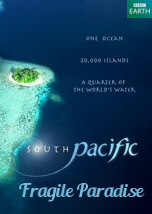
South Pacific Fragile Paradise

   2009    Nature
The extraordinary wildlife, culture and history of this immense, fascinating ocean and its myriad islands are revealed in stunning detail. With its coral reefs, turquoise lagoons and dramatic oceanic atolls, the South Pacific is the archetypal paradise. It is still relatively healthy and teeming with fish, but it is a fragile paradise. International fishing fleets are taking a serious toll on the sharks, albatross and tuna, and there are other insidious threats to these bountiful seas. We look at what is being done to preserve the ocean and its wildlife.

Kalahari

   2013    Nature
In Africa's ancient south west corner, two extraordinary deserts sit side by side. Water is in short supply, yet these deserts are somehow full of life because the creatures that live here have turned the rules of survival on their head. This film celebrates nature's ingenuity, no matter how tough it gets. In the Kalahari scrublands, clever meerkats are outsmarted by a wily bird, solitary and belligerent black rhinos get together to party and giant insects stalk huge flocks of birds. Rain almost never falls in the Namib - instead it must make do with vaporous, vanishing fog. The creatures in this, the world's oldest desert, have gone to the extremes, as spiders wheel to escape and a desert giraffe fights to defend his scant resources in the greatest giraffe battle ever filmed.
Series: Africa with David Attenborough

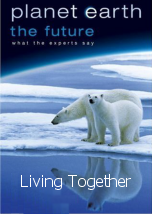
Living Together

   2006    Nature
The documentary deals with the future of conservation. It begins by looking at previous efforts. The 'Save The Whales' campaign, which started in the 1960s, is seen to have had a limited effect, as whaling continues and fish stocks also decline. In the 1990s, as head of the Kenya Wildlife Service, Richard Leakey took on the poachers by employing armed units. Although it was successful in saving elephants, the policy was detrimental to the Maasai people, who were forced from their land. The need for "fortress" areas is questioned, and the recently highlighted Raja Ampat coral reef in Indonesia is an example. The more tourism it generates, the greater the potential for damage — and inevitable coastal construction. Sustainable development is viewed as controversial, and one contributor perceives it to currently be a "contradiction in terms". Trophy hunting is also contentious. Those that support it argue that it generates wealth for local economies, while its opponents point to the reducing numbers of species such as the markhor. Ecotourism is shown to be beneficial, as it is in the interests of its providers to protect their environments. However, in some areas, such as the Borneo rainforests, the great diversity of species is being replaced by monocultures. The role of both religion and the media in conservation is argued to be extremely important. Contributors to the programme admit a degree of worry about the future, but also optimism.

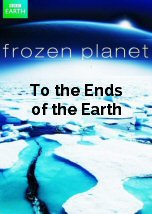
Frozen Planet: To the Ends of the Earth

   2011    Nature
Our journey begins with David Attenborough at the North Pole, as the sun returns after six months of darkness. We follow a pair of courting polar bears, which reveal a surprisingly tender side. Next stop is the giant Greenland ice cap, where waterfalls plunge into the heart of the ice and a colossal iceberg carves into the sea. Humpback whales join the largest gathering of seabirds on earth to feast in rich Alaskan waters. Further south, the tree line marks the start of the Taiga forest, containing one third of all trees on earth. Here, 25 of the world's largest wolves take on formidable bison prey. At the other end of our planet, the Antarctic begins in the Southern Ocean where surfing penguins struggle to escape a hungry sea-lion and teams of orcas create giant waves to wash seals from ice floes -a filming first. Diving below the ice, we discover prehistoric giants, including terrifying sea spiders and woodlice the size of dinner plates. Above ground, crystal caverns ring the summit of Erebus, the most southerly volcano on earth. From here we retrace the routes of early explorers across the formidable Antarctic ice-cap - the largest expanse of ice on our planet. Finally, we rejoin David at the South Pole, exactly one hundred years after Amundsen then Scott were the first humans to stand there
Series: Frozen Planet
Wild Wild Country

Wild Wild Country

2018  Culture
Blue Planet II

Blue Planet II

2017  Nature
All or Nothing: Arsenal

All or Nothing: Arsenal

2022  Culture
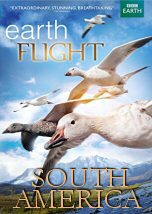
Earthflight

Earthflight

2012  Nature
Generation Iron

Generation Iron

2018  History
Life

Life

2009  Nature
Frozen Planet II

Frozen Planet II

2022  Nature