













Last Watched

"Cave"  Sort by

Frozen Planet: The Last Frontier

   2011    Culture
The documentary series reveals the extraordinary riches and wonders of the Polar Regions that have kept people visiting them for thousands of years. Today, their survival relies on a combination of ancient wisdom and cutting-edge science. Most Arctic people live in Siberia, either in cities like Norilsk - the coldest city on earth - or out on the tundra, where tribes like the Dogan survive by herding reindeer, using them to drag their homes behind them. On the coast, traditional people still hunt walrus from open boats - it is dangerous work, but one big walrus will feed a family for weeks. Settlers are drawn to the Arctic by its abundant minerals; the Danish Armed Forces maintain their claim to Greenland's mineral wealth with an epic dog sled patrol, covering 2,000 miles through the winter. Above, the spectacular northern lights can disrupt power supplies so scientists monitor it constantly, firing rockets into it to release a cloud of glowing smoke 100 kilometres high. In contrast, Antarctica is so remote and cold that it was only a century ago that the first people explored the continent. Captain Scott's hut still stands as a memorial to these men. Science is now the only significant human activity allowed; robot submarines are sent deep beneath the ice in search of new life-forms, which may also be found in a labyrinth of ice caves high up on an active volcano. Above, colossal balloons are launched into the purest air on earth to detect cosmic rays. At the South Pole there is a research base designed to withstand the world's most extreme winters. Cut off from the outside world for six months, the base is totally self-sufficient, even boasting a greenhouse.
Series: Frozen Planet

20,000 Days on Earth

   2014    Art
Drama and reality combine in a fictitious 24 hours in the life of musician and international culture icon Nick Cave. With startlingly frank insights and an intimate portrayal of the artistic process, this film examines what makes us who we are and celebrates the transformative power of the creative spirit. An inventive, lyrical ode to creativity, 20,000 Days On Earth features musician and cultural icon Nick Cave. Fusing drama and reality by weaving the journey of a fictional day in Cave’s life, the film is an intimate portrayal of the artistic process.

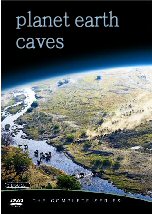
Caves

   2007    Nature
The Cave of Swallows in Mexico is a 400m vertical shaft, deep enough to engulf the Empire State Building. The Lechuguilla cave system in the USA is 193km long and 500m deep with astonishing crystal formations hanging from its chambers. Although often overlooked, caves are remarkable habitats with equally bizarre wildlife. Cave angel fish cling to the walls behind cave waterfalls with microscopic hooks on their flattened fins. Cave swiftlets navigate by echo-location and build nests out of saliva. The Texas cave salamander has neither eyes nor pigment. Unique access to a hidden world of stalactites, stalagmites, snotites and troglodytes brings a wealth of surprises.
Series: Planet Earth

The Incredible Human Journey: Australia

   2009    History
Dr Alice Roberts looks at our ancestors' seemingly impossible journey to Australia. Miraculously preserved footprints and very old human fossils buried in the outback suggest a mystery: that humans reached Australia almost before anywhere else. How could they have travelled so far from Africa, crossing the open sea on the way, and do it thousands of years before they made it to Europe? The evidence trail is faint and difficult to pick up, but Alice takes on the challenge. In India, new discoveries among the debris of a super volcano hint that our species started the journey much earlier than previously thought, while in Malaysia, genetics points to an ancient trail still detectable in the DNA of tribes today. Alice travels deep into the Asian rainforests in search of the first cavemen of Borneo and tests out a Stone Age raft to see whether sea travel would have been possible thousands of years ago, before coming to a powerful conclusion.
Series: The Incredible Human Journey

Walking with Cavemen: Savage Family

   2003    History
One and a half million years ago, a new breed of ape-man walks the land. In southern Africa, Homo Ergaster has taken the next step to becoming human. They have long, modern looking noses, which cool air as they breathe. Their hairless bodies, with millions of tiny sweat glands, mean they don't pant anymore to control their temperature - they sweat. And, above all, they have big brains - nearly two-thirds the size of ours.
Series: Walking with Cavemen

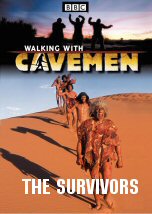
Walking with Cavemen: The Survivors

   2003    History
Nearly half a million years ago, the most advanced human yet roams Europe. Strong and powerful, Homo heidelbergensis are fierce hunters, use sophisticated tools and live in close-knit family groups. Over 200,000 years they become split into two populations by extremes of weather and environment and evolve separately into two very different species. In the North are the Neanderthals, whose physical power and resilience is the key to surviving in ice age Northern Europe. About 140,000 years ago, Africa is in the grip of a devastating drought, and something remarkable has happened to the descendants of heidelbergensis who live there. The combination of environment and chance has bred in them a unique ability that will change the course of human history. It will be this small band of southern survivors, perhaps numbering just a few tens of thousands, who will come to dominate the world and be known as Homo sapiens.
Series: Walking with Cavemen
Arnold

Arnold

2023  History
The Planets

The Planets

2000  Science
Dirty Money

Dirty Money

2018  Culture
Vegan

Vegan

2020  Culture
Dark Net

Dark Net

2016  Technology
Secrets of the Dead

Secrets of the Dead

2017  History
Zeitgeist

Zeitgeist

2007  Culture