





Last Watched

"Solar"  Sort by

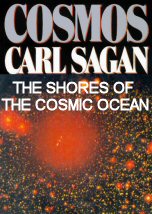
Cosmos Carl Sagan: The Shores of the Cosmic Ocean

   1980    Science
Carl Sagan opens the program with a description of the cosmos and the Spaceship of the Imagination. The ship journeys through the universe's hundred billion galaxies, the Local Group, the Andromeda Galaxy, the Milky Way, the Orion Nebula, our Solar System, and finally the planet Earth. Eratosthenes' successful calculation of the circumference of Earth leads to a description of the ancient Library of Alexandria. Finally, the Ages of Science are described, before pulling back to the full span of the Cosmic Calendar.
Series: Cosmos
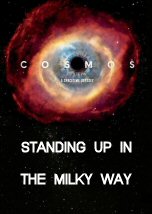
Cosmos: A Spacetime Odyssey. Standing Up in the Milky Way

   2014    Science    HD
Famed astrophysicist Neil deGrasse Tyson takes a tour of the Solar System and the known universe establishing the components of Earth's "address" within the Virgo Supercluster. He then shares the story of the person who championed an expansive understanding of Earth's place in the universe by presenting Renaissance Italian Giordano Bruno's vision of the universe as a limitless expanse of space and time. He then makes an exploration into the Cosmic Calendar, which dates back to the dawn of the Big Bang (similar to the presentation from episode 1 of the original series). The episode ends with deGrasse Tyson narrating how he met his mentor Carl Sagan, who hosted the first Cosmos series.
Series: Cosmos: A Spacetime Odyssey

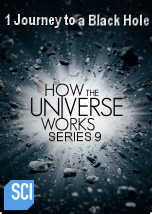
Jupiter: Destroyer or Savior

   2014    Science
Beneath Jupiter's swirling clouds lie our solar system's deepest secrets: from its violent youth, through the birth of life to the death of the sun. Now, scientists are unlocking these secrets and discovering that every living thing exists thanks to Jupiter.
Series: How the Universe Works

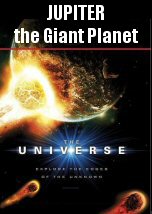
Jupiter the Giant Planet

   2007    Science    3D
A look at the solar system's largest planet, Jupiter; its formation and composition and its mini-solar system of over 60 moons – some of which may have the potential to support extra-terrestrial life.
Series: The Universe

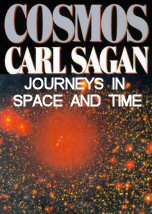
Journeys in Space and Time

   1980    Science
Ideas about time and space are explored in the changes that constellations undergo over time, the redshift and blue shift measured in interstellar objects, time dilation in Albert Einstein's theory of relativity, the designs of both Leonardo da Vinci and spacecraft that could travel near light speed, time travel and its hypothetical effects on human history, the origins of the Solar System, the history of life, and the immensity of space. In Cosmos Update, the idea of faster-than-light travel by wormholes (researched by Kip Thorne and shown in Sagan’s novel Contact) is discussed.
Series: Cosmos

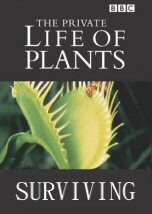
Surviving

   1995    Nature
the final episode deals with plants that live in hostile environments. Attenborough visits Ellesmere Island, north of the Arctic Circle, to demonstrate that even in a place that is unconducive to life, it can be found. Algae and lichens grow in or on rock, and during summer, when the ice melts, flowers are much more apparent. However, they must remain close to the ground to stay out of the chilling wind. In the Tasmanian mountains, plants conserve heat by growing into 'cushions' that act as solar panels, with as many as a million individual shoots grouped together as one. Others, such as the lobelia in Mount Kenya, have a 'fur coat' of dense hairs on their leaves. The saguaro cactus in the Sonoran Desert flourishes because of its ability to retain vast amounts of water, which can't be lost through leaves because it has none. Many desert dwellers benefit from an accelerated life cycle, blooming rapidly within weeks after rainfall. Conversely, Mount Roraima is one of the wettest places on Earth. It is a huge sandstone plateau with high waterfalls and nutrients are continuously washed away, so plants have to adapt their diet if they are to survive. A bladderwort is shown invading a bromeliad. Inhabitants of lakes have other problems to contend with: those that dominate the surface will proliferate, and the Amazon water lily provides an apt illustration. Attenborough ends the series with an entreaty for the conservation of plant species.
Series: The Private Life of Plants
The Germanic Tribes

The Germanic Tribes

2007  History
Human Universe

Human Universe

2014  History
Sex Explained

Sex Explained

2020  Medicine
How to Grow a Planet

How to Grow a Planet

2012  Science
Tiger

Tiger

2020  History
The Last Dance

The Last Dance

2020  Culture