







Last Watched

"Trial"  Sort by

Jupiter the Giant Planet

   2007    Science    3D
A look at the solar system's largest planet, Jupiter; its formation and composition and its mini-solar system of over 60 moons – some of which may have the potential to support extra-terrestrial life.
Series: The Universe

Who Speaks for Earth

   1980    Culture
Sagan reflects on the future of humanity and the question of 'who speaks for Earth?' when meeting extraterrestrials. He discusses the very different meetings of the Tlingit people and explorer Jean-François de La Perouse with the destruction of the Aztecs by Spanish conquistadors, the looming threat of nuclear warfare, and the threats shown by destruction of the Library of Alexandria and the murder of Hypatia. The episode ends with an overview of the beginning of the universe, the evolution of life, and the accomplishments of humanity and makes a plea to mankind to cherish life and continue its journey in the cosmos. The Cosmos Update notes the preliminary reconnaissance of planets with spacecraft, the fall of the Berlin Wall and the end of apartheid in South Africa, and measures towards the reduction of nuclear weapons.
Series: Cosmos

Fire

   2010    Culture
Iain explores man's relationship with fire. He begins by embarking on an extraordinary encounter with this terrifying force of nature - a walk right through the heart of a raging fire. Fire has long been our main source of energy and Iain shows how this meant that the planet played a crucial role in Britain's industrial revolution, whilst holding China's development back. Along the way he dives in a mysterious lake in Oregon, climbs a glacier of salt, crawls through an extraordinary cave in Iran and takes a therapeutic bath in crude oil.
Series: How Earth Made Us

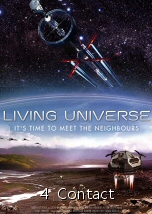
Contact

   2018    Technology    HD
Minerva B is a small rocky planet just like earth, where spacecraft Artemis has found water, organic molecules, and complex creatures. Is there something more to find?
'I am the mind of the spaceship, alone among the stars. 50 years ago, from a planet far away, the planet you call home, I launched. A journey of 28 trillion miles across the yawning time of space to the exoplanet, Minerva B: a small, rocky planet, much like Earth, but orbiting another sun. Here, I have found water, organic molecules, and microorganisms. When the news of my discovery reaches Earth years from now, some of you will be amazed. But others will remain unsatisfied, and you will ask, have I not found animals or birds? Have I not met intelligent life like us? And so, my search continues. I will find life of marvellous complexity, and the traces of a devastating loss.'
Series: Living Universe

Secrets of the Seven Earths

   2018    Science    HD
We are living in a new golden age of exploration. Planet hunters are searching far beyond our solar system and they are actually finding new worlds orbiting other suns. Thousands of these alien worlds have already been found, but this is the story of perhaps the greatest discovery yet, a star 40 light-years away with seven Earth-sized planets: Trappist-1.
This new discovery of seven alien Earth-like planets in a faraway solar system is a major milestone in our hunt for extraterrestrial life, and experts investigate the secrets of Trappist -1's mysterious worlds to reveal if we're truly alone in the universe.
Series: Space Deepest Secrets

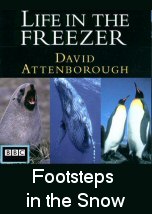
Footsteps in the Snow

   1993    History
This episode discusses the human exploration of Antarctica, in particular the mission led by Captain Robert Falcon Scott, whose team died on the way back from the South Pole. It shows the scientific work in the modern human bases in Antarctica, especially Mawson Base and its observation of Adelie Penguins (partially through tracking devices). The second half of the episode describes how the series was made. Most crucial was of course the camera work. To get access to the wildlife of the sea, for example, boats, divers, suspended capsules and remotely controlled cameras mounted on inflatables were used. Particularly dangerous to divers were Leopard Seals and other predators. The film concludes that although working in Antarctica is now much easier than during the early days of exploration, human footsteps on the continent are still exceedingly rare in part because of international treaties prohibiting industrial exploitation.
Series: Life in the Freezer