

Last Watched

"City"  Sort by

The Day they Dropped the Bomb

   2015    History
August 6th 1945 marked the start of a terrifying new episode in human history. This documentary marks the 70th anniversary of the day when the world's first atomic bomb was dropped on the Japanese city of Hiroshima by a Boeing B-29 USAF Superfortress bomber, nicknamed Enola Gay after the pilot's mother". Up to 80,000 people - 30 per cent of the population - were killed by the blast and resulting firestorm and over 70,000 were injured. This documentary gives a minute-by-minute account of what happened on that fateful day, through the testimony of people who were there and rarely-seen archive footage from the time. Made on location in Hiroshima and the USA, it features unique interviews with eyewitnesses who have seldom, if ever, spoken about the experience. Several of them are no longer alive, they include the last surviving member of the crew of the Enola Gay - navigator Dutch Van Kirk who died in July 2014.

Petra: Lost City of Stone

   2015    History
More than 2,000 years ago, the thriving city of Petra rose up in the bone-dry desert of what is now Jordan. An oasis of culture and abundance, the city was built by wealthy merchants whose camel caravans transported incense and spices from the Arabian Gulf. They carved spectacular temple-tombs into its soaring cliffs, raised a monumental Great Temple at its heart, and devised an ingenious system that channeled water to vineyards, bathhouses, fountains, and pools. But following a catastrophic earthquake and a slump in its desert trade routes, Petra's unique culture faded and was lost to most of the world for nearly a thousand years. Now, in a daring experiment, an archaeologist and sculptors team up to carve an iconic temple-tomb to find out how the ancient people of Petra built their city of stone. Meanwhile, scientists using remote sensors and hydraulic flumes uncover the vast city and its sophisticated water system. The race is on to discover how these nomads created this oasis of culture in one of the harshest climates on Earth.

The Secret Life of Chaos

   2010    Science
Chaos theory has a bad name, conjuring up images of unpredictable weather, economic crashes and science gone wrong. But there is a fascinating and hidden side to Chaos, one that scientists are only now beginning to understand. It turns out that chaos theory answers a question that mankind has asked for millennia - how did we get here? In this documentary, Professor Jim Al-Khalili sets out to uncover one of the great mysteries of science - how does a universe that starts off as dust end up with intelligent life? How does order emerge from disorder? It's a mindbending, counterintuitive and for many people a deeply troubling idea. But Professor Al-Khalili reveals the science behind much of beauty and structure in the natural world and discovers that far from it being magic or an act of God, it is in fact an intrinsic part of the laws of physics. Amazingly, it turns out that the mathematics of chaos can explain how and why the universe creates exquisite order and pattern. And the best thing is that one doesn't need to be a scientist to understand it. The natural world is full of awe-inspiring examples of the way nature transforms simplicity into complexity. From trees to clouds to humans - after watching this film you'll never be able to look at the world in the same way again.

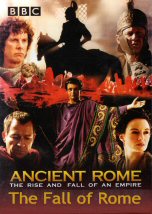
Ancient Rome: The Fall of Rome

   2006    History
In AD 410, the Goth hordes sacked the city. This event symbolised Rome's collapse. Within 70 years, the western empire - what we think of as Ancient Rome - was abandoned. But it should never have happened at all.
Series: Ancient Rome

Lands of Gold

   2013    History
Through the mountains and jungles of Colombia, Cooper goes in search of the truth behind one of the greatest stories ever told - the legend of El Dorado. His journey takes him from Bogota to the Caribbean coast, through territories once dominated by two cultures, the Muisca and the Tairona, who flourished for centuries before the arrival of the Spanish in the 16th century. Cooper reveals forgotten peoples who valued gold in a way the Western world still struggles to understand, travelling to an astonishing lost city and meeting the last survivors of an ancient civilisation.
Series: Lost Kingdoms of South America

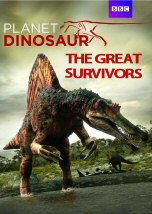
The Great Survivors

   2011    Science
The final episode explores dinosaurs' extraordinary ability to survive. Featured dinosaurs include the bizarre magyarosaurus, which lived in the shadow of the biggest flying animal - hatzegopteryx - and showed an amazing adaptation to island life; and the weird nothronychus, a carnivore that gave up meat eating. This astonishing capacity to evolve into ever more diverse and bizarre forms meant that dinosaurs not only spread throughout the world, but also dominated life upon it for more than 160 million years. It was only an unprecedented extraterrestrial event that finally saw the end of planet dinosaur.
Series: Planet Dinosaur